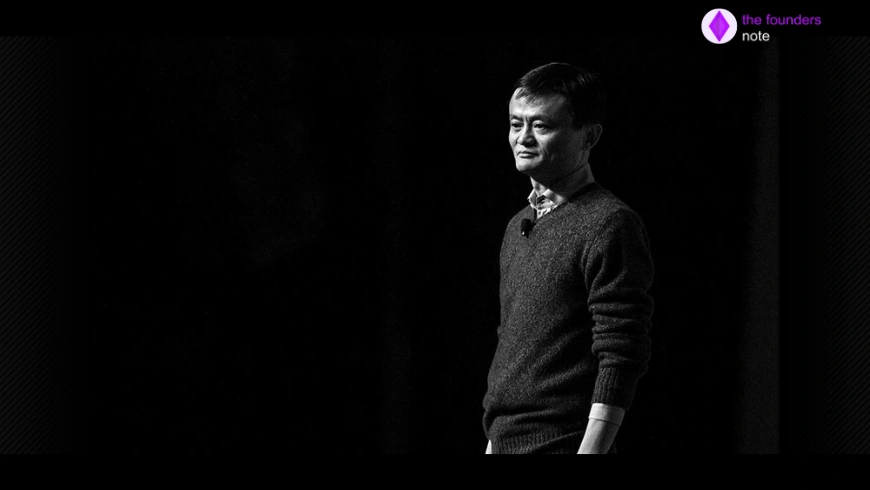
Jack Ma: From Rejected Job Applicant to Alibaba Founder
Turned down by KFC, the police, and Harvard ten times over — this is the full story of the English teacher who built one of the world’s largest e-commerce empires from his own apartment.

Alibaba
Early Life & Family Origins
Ma Yun — known worldwide as Jack Ma — was born on September 10, 1964, in Hangzhou, Zhejiang province, China, during the early years of communist China’s isolation from the West. He grew up alongside an elder brother and younger sister in a household that, by his own account, was far from wealthy: his parents worked as traditional musicians and storytellers, earning barely enough to be considered middle class at the time. His grandfather had served as a security guard during the Second Sino-Japanese War, though Ma has shared relatively little else publicly about his extended family history.
Learning English & Becoming “Jack” Formative Years
Ma developed a fascination with the English language as a young boy. At around age 12, he bought a pocket radio and began listening regularly to English-language broadcasts, including Voice of America. With no money for private tutors, he took a more direct approach: for nine years, he rode his bicycle roughly 27 kilometers a day to work as a free, self-appointed tour guide for foreign visitors to Hangzhou, using every encounter to practice his English.
Former U.S. President Richard Nixon’s 1972 visit to Hangzhou had boosted tourism to the city, giving young Ma more opportunities to meet foreigners. One of those encounters, with an American family that included a man named Ken Morley, proved life-changing — eventually leading to a trip to Australia and a friendship that broadened Ma’s worldview considerably. It was a different foreign pen pal, unable to pronounce his Chinese name, who nicknamed him “Jack” — a name that stuck for the rest of his life.
Rejected, But Not a Failure Resilience
Long before Jack Ma became one of China’s most celebrated entrepreneurs, rejection was practically a running theme of his life. He struggled academically from the very start, failing his primary school examinations twice and taking two extra years just to gain acceptance into an ordinary Chinese high school. He then failed his middle school entrance exams three times, transferring to Hangzhou No. 8 Middle School at age 13 after a run of fights with classmates.
He failed China’s national college entrance exam (the gaokao) twice before finally being admitted, on his third attempt in 1984, to what he has openly called his city’s “worst university” — Hangzhou Normal University, then still known as Hangzhou Teachers College — with mathematics remaining his consistent weak point throughout.
The rejections didn’t stop after graduation. Ma applied to roughly 30 jobs and was turned down by every one of them. He famously recalled being one of 24 applicants for a role at KFC when the chain arrived in China — 23 were hired, and he was the only one rejected. He also applied to join the police force and was the only one of five candidates turned away, bluntly told, “No, you’re no good.” He additionally applied to Harvard University roughly ten times over the years and was rejected every single time. His early entrepreneurial ventures fared no better at first: two of his initial business undertakings failed outright before Alibaba ever got off the ground.
“I think we have to get used to it. We’re not that good.”
“I never give up. Everybody should get used to failing, but not being accepted by other people. Why should other people help you? You should earn the right to be helped.”
Education Foundations
Ma earned a Bachelor of Arts degree in English from Hangzhou Normal University in 1988, having distinguished himself academically once admitted — becoming a top student in the foreign languages department and serving as chairman of the student union, and later as chairman of the Hangzhou Federation of Students for two terms.
Early Career: Teacher to Entrepreneur 1988–1994
From 1988 to 1993, Ma taught English at the Hangzhou Institute of Electronics and Engineering, now Hangzhou Dianzi University, reportedly earning around $12 a month. In 1994, he founded his first company, the Hangzhou Haibo Translation Agency, providing English translation and interpretation services — a natural extension of the language skills he had spent years building for free on the streets of Hangzhou.
Discovering the Internet 1995
In early 1995, Ma traveled to the United States on a government assignment related to a highway-building project for the Hangzhou city government. There, he encountered the internet and a computer for the first time. On the Mosaic browser, the first word he searched was “beer,” which returned results from countries around the world — but nothing from China. He then searched “China” and found no results at all.
Ma decided, in that moment, that China needed to get online. On his return, he founded China Pages, one of China’s first internet companies, creating web pages for Chinese businesses and registering the domain chinapages.com in April 1995. Working with the help of friends in the United States despite having no formal technical background, Ma built the company into a real success — within roughly three years, China Pages had cleared approximately 5,000,000 RMB in profit. He left the company two years in, however, largely due to strong competition from Hangzhou Telecom, which launched a rival service called Chinesepage. From 1998 to 1999, he headed an internet company in Beijing established by the China International Electronic Commerce Center under the Ministry of Foreign Trade and Economic Cooperation, but grew convinced that staying inside a government-linked structure would cause him to miss the broader opportunities of the internet revolution.
Founding Alibaba 1999
Ma persuaded his team at the ministry to return with him to Hangzhou and found the Alibaba Group, launched from his own apartment after he convinced 17 friends to invest in and join his new venture, with the group contributing roughly $60,000 in combined initial capital. The company took the form of a business-to-business website connecting small Chinese manufacturers and exporters with buyers around the world. Remarkably, Ma had never written a single line of code and had no background in selling anything before starting what would become one of the biggest e-commerce networks on Earth — he was 31 years old.
Ma believed the small-business-to-small-business internet market held far greater long-term potential than the more crowded business-to-consumer space. Alibaba charged small businesses a membership fee to be certified as trustworthy sellers, with a higher fee for those wanting to reach customers outside China. Initially, Alibaba raised no outside investment at all, running purely on its founders’ own capital, before securing $20 million from SoftBank and $5 million from Goldman Sachs in 1999 and 2000. Building public trust that online payments and package delivery could be safe was, by Ma’s own account, one of the single biggest challenges he and Alibaba faced in those early years — a challenge that shaped nearly every product decision that followed. Alibaba soon attracted serious outside acquisition interest as well, drawing offers from eBay starting in 2004. In 2005, Yahoo! bought a 40% stake in Alibaba for roughly $1 billion in a deal brokered through Yahoo cofounder Jerry Yang, whom Ma had met years earlier.
Taobao vs. eBay 2003
In 2003, Ma launched Taobao (“searching for treasure”), a consumer-to-consumer marketplace built to compete directly with eBay’s Chinese joint venture, EachNet, which then controlled roughly 80% of the market. Ma judged that EachNet’s practice of charging sellers a transaction fee was a critical weakness. Taobao charged no such fee, instead making money through advertising and optional paid seller services — famously, Ma turned down an acquisition offer from eBay for Taobao and instead secured a $1 billion investment from Yahoo.
The bet paid off decisively: by 2007, Taobao commanded a 67% market share, and eBay ultimately ceded majority ownership of its China operations to the Chinese media company TOM Group, which folded the business into a new subsidiary called TOM EachNet. To create trust in online payments, Alibaba also launched Alipay in 2003 as a third-party escrow-style payment system — a product that would later grow into its own financial empire.
In 2011, Ma announced that Taobao itself would split into three separate companies: Taobao Marketplace, where individuals could buy and sell goods directly; Taobao Mall (later rebranded Tmall), an online shopping portal for established brands and retailers; and eTao, a dedicated shopping-related search engine.
Alibaba’s Business Empire Subsidiaries
Beyond Taobao and Alipay, Ma built out Alibaba Group into a sprawling ecosystem of businesses from 2003 onward, including Ali Mama (an advertising and marketing platform) and Lynx, alongside Alibaba Cloud Computing, the group-buying site Juhuasuan, the wholesale marketplace 1688.com, and the cross-border marketplace AliExpress.com. At its broadest, Alibaba Group has counted nine major subsidiaries under its umbrella: Alibaba.com, Taobao Marketplace, Tmall, eTao, Alibaba Cloud, Juhuasuan, 1688.com, AliExpress.com, and Alipay.
At one notable point in Alibaba’s growth, industry commentary highlighted just how large the company had become relative to Western tech peers: Alibaba’s platforms were said to be worth more than Facebook and to process a greater volume of goods than eBay and Amazon combined — despite Alibaba and Ma remaining relatively unfamiliar names to consumers outside China. In an earlier snapshot of his fortune tied to Alibaba’s record-setting Ant Group IPO filing, Ma was reported to hold a 7.8% stake in Alibaba and a 50% stake in Alipay, with a net worth estimated at around $25 billion at that stage of the company’s growth.
Two Landmark IPOs 2007 & 2014
Alibaba.com went public in Hong Kong in 2007, raising $1.7 billion. That was dwarfed seven years later when the broader Alibaba Group debuted on the New York Stock Exchange in September 2014, raising $21.8 billion — at the time, the largest IPO in U.S. history — and giving the company a market value of $168 billion, the highest ever recorded for an internet company at IPO. Ma had already stepped down as Alibaba’s CEO in 2013, handing the role to Daniel Zhang, though he remained executive chairman.
Ant Group & the 2020 Reckoning Turning Point
In 2014, Ma oversaw the creation of Ant Group as the parent company of Alipay and Alibaba’s broader financial-services operations. Ant was scheduled for what would have been the largest IPO in history in 2020, but the listing was abruptly halted after Ma delivered a speech publicly criticizing China’s financial regulators and state-owned banks, describing their approach as having a “pawnshop mentality.” Shortly afterward, Chinese officials demanded the company be restructured, an antitrust investigation was opened into Alibaba itself, and in April 2021 Alibaba was fined $2.8 billion for violating anti-monopoly laws — a sum described by observers as minor relative to the company’s overall earnings, but highly symbolic of the shift in Beijing’s stance toward its largest tech entrepreneurs.
Stepping Back & Years Out of the Spotlight 2019–2023
In September 2018, Ma announced he would step down as Alibaba’s chairman the following year to focus on philanthropy, formally departing the role in September 2019 while remaining on the board. Following the Ant Group fallout in late 2020, Ma largely disappeared from public view for several months, reappearing briefly via video message to a charity event in January 2021 and later spotted golfing in Hainan. Chinese regulators subsequently ordered him to divest certain media holdings, including Hong Kong’s South China Morning Post, in March 2021. Reports through 2022 described him living a comparatively low-profile life abroad, including time in Tokyo, where he was later appointed a visiting professor at the University of Tokyo’s Tokyo College.
Return to Public Life 2023–2026
Ma made a notable public appearance at Hangzhou’s Yungu school in March 2023, confirming his first sighting in months, and returned more fully to China later that year just as Alibaba unveiled a plan to split into six separate businesses — an overhaul that has since been partially scaled back. By 2025, Bloomberg reported that Ma had stepped back into a more visible, active role at Alibaba than at any point in recent years, particularly around the company’s push into artificial intelligence and its competitive battles with rivals JD.com, PDD Holdings, and Meituan. He has also appeared publicly alongside Chinese President Xi Jinping and executives from Huawei, BYD, and Xiaomi — a signal, many observers noted, of Beijing’s interest in projecting renewed confidence in its private tech sector.
The Musk-Ma AI Debate 2019
In August 2019, Ma and Elon Musk held a widely covered public conversation in Shanghai in which the two sparred openly over the risks and promise of artificial intelligence — Musk warning of existential dangers, while Ma offered a more optimistic take, suggesting AI could eventually enable dramatically shorter working weeks for humanity. The exchange became one of the more memorable public disagreements between two of the era’s best-known tech entrepreneurs.
Personal Life & Trivia Family
Ma is married to Zhang Ying, a former teacher he met while studying at Hangzhou Normal University; the couple has children together, with various sources citing two or three. He is a practitioner of Tai Chi and other martial arts, has sparred on camera with martial-arts star Jet Li for a promotional short film, and made his acting debut in the 2017 kung fu short “Gong Shou Dao.” He is known for an eccentric, theatrical streak, having sung and danced on stage at Alibaba’s annual company events.
Away from business, Ma has a passion for calligraphy, has written on business and leadership, keeps a personal library reported to hold more than 10,000 books, and owns a vineyard in France. He is also a member of the Chinese Communist Party — a fact that surprised many international observers when it became widely known, given his public image as an independent entrepreneur.
Philanthropy Giving Back
Ma founded the Jack Ma Foundation in 2018 to focus on education, environmental protection, and public health, alongside the earlier Alibaba Foundation, established in 2011 to support broader charitable causes; that same year, Alibaba Group committed to allocating 0.3% of its annual revenue to environmental protection projects. In 2015, Ma also launched the Alibaba Hong Kong Young Entrepreneurs Foundation to support the city’s startup community, and in 2015 he founded Hupan School, a business school for entrepreneurs, later relaunching related education efforts in subsequent years.
His philanthropic response to the 2015 Nepal earthquake funded the rebuilding of roughly 1,000 damaged houses, followed by further fundraising for another 9,000 homes. During the COVID-19 pandemic, Ma and his foundations donated medical supplies and funding across multiple countries, work recognized with honors including Jordan’s first-class medal from King Abdullah II and a nomination for Pakistan’s Hilal-e-Quaid-e-Azam medal. In 2021, Alibaba Group topped China’s Charity List with total cash donations of 3.22 billion yuan, reflecting the scale of the group’s giving even amid a difficult regulatory year.
Awards & Honors Recognition
| Year | Honor |
|---|---|
| 2004 | CCTV “Top 10 Economic Personalities of the Year” |
| 2005 | World Economic Forum “Young Global Leader”; Fortune’s “25 Most Powerful Businesspeople in Asia” |
| 2007 | Businessweek “Businessperson of the Year” |
| 2008 | Barron’s “World’s Best CEOs” |
| 2009 | TIME’s 100 Most Influential People; Forbes China Top 10 Respected Entrepreneurs; CCTV Business Leaders of the Decade |
| 2009 | Trustee, The Nature Conservancy’s China program |
| 2010 | Forbes Asia “Heroes of Philanthropy”; joins The Nature Conservancy’s global board of directors |
| 2013 | Honorary doctorate, Hong Kong University of Science and Technology |
| 2014 | TIME’s 100 Most Influential People (2nd time); Forbes 30th-most-powerful person globally |
| 2015 | Asian Award “Entrepreneur of the Year”; honorary doctorate, National Taiwan Normal University |
| 2016 | Chevalier of the French Legion of Honour |
| 2017 | 2nd place, Fortune’s “World’s 50 Greatest Leaders”; 3rd place, KPMG global tech innovation visionary survey; honorary Doctor of Science in Technopreneurship, De La Salle University Manila |
| 2018 | Honorary doctorates from University of Hong Kong and Tel Aviv University |
| 2019 | UN Secretary-General’s advocate for Sustainable Development Goals; Forbes Asia’s “2019 Heroes of Philanthropy” and Malcolm S. Forbes Lifetime Achievement Award |
| 2020 | King Abdullah II first-class medal for COVID-19 relief work |
| 2023 | Confucius Education Award, World Chinese Culture Festival, Tokyo |
| Ongoing | Board member, Japan’s SoftBank and China’s Huayi Brothers Media Corporation |
Quick Facts At a Glance
Full Name
Born
Education
Companies Founded
Spouse
Children
Residence
Alibaba Stake
Roles Held
Est. Net Worth
Peak Net Worth
Known For
Foundation
Milestone Timeline Journey
Born in Hangzhou, Zhejiang province, China.
Graduates from Hangzhou Normal University with a B.A. in English.
Teaches English at Hangzhou Dianzi University.
Founds the Hangzhou Haibo Translation Agency.
Encounters the internet in the U.S.; founds China Pages.
Cofounds Alibaba Group from his apartment in Hangzhou.
Launches Taobao and Alipay.
Alibaba.com raises $1.7 billion in its Hong Kong IPO.
Alibaba pledges 0.3% of annual revenue to environmental protection; Ma joins The Nature Conservancy’s global board.
Alibaba Foundation established; Taobao splits into Taobao Marketplace, Taobao Mall, and eTao.
Steps down as Alibaba CEO; remains executive chairman.
Alibaba Group’s record-breaking $21.8 billion NYSE IPO; Ant Group established.
Launches the Alibaba Hong Kong Young Entrepreneurs Foundation and Hupan School; funds Nepal earthquake rebuilding.
Announces plan to step down as chairman; founds the Jack Ma Foundation.
Steps down as Alibaba’s chairman.
Ant Group’s IPO is halted following Ma’s regulatory-criticism speech.
Alibaba fined $2.8 billion for antitrust violations; Ma’s fortune peaks around $48.4 billion per Forbes before he largely withdraws from public view.
Returns to China as Alibaba announces a six-way business split.
Resumes an active role at Alibaba, focused on its AI strategy.
Frequently Asked Questions FAQ
Who is Jack Ma?
Jack Ma is a Chinese entrepreneur who cofounded Alibaba Group in 1999 and built it into one of the world’s largest e-commerce and technology conglomerates.
What companies did Jack Ma found?
He founded the Hangzhou Haibo Translation Agency, China Pages, Alibaba Group, Taobao, Ant Group, and Yunfeng Capital, among others.
Why did Ant Group’s IPO get cancelled?
Chinese regulators halted the planned 2020 listing after Ma publicly criticized state financial regulators, followed by a demand that Ant Group restructure and a separate antitrust investigation into Alibaba.
Is Jack Ma still involved with Alibaba?
He stepped down as CEO in 2013 and chairman in 2019, but reports from 2025 indicate he has taken a more active advisory role again, particularly around Alibaba’s AI initiatives.
What is Jack Ma’s net worth?
Estimates vary by source and date; Bloomberg placed it at roughly $44.5 billion in late 2025, tied primarily to his stakes in Alibaba and Ant Group.
Why was Jack Ma out of the public eye for so long?
Following the Ant Group and antitrust fallout in late 2020, Ma kept an unusually low profile for roughly two to three years, a period widely linked to China’s broader regulatory crackdown on its tech sector.
Proof That Rejection Isn’t the End of the Story
From a man rejected by KFC, the police, and Harvard, to the founder of a company that once rivaled Amazon and eBay combined — Jack Ma’s story is a reminder that persistence, more than talent alone, often writes the final chapter.