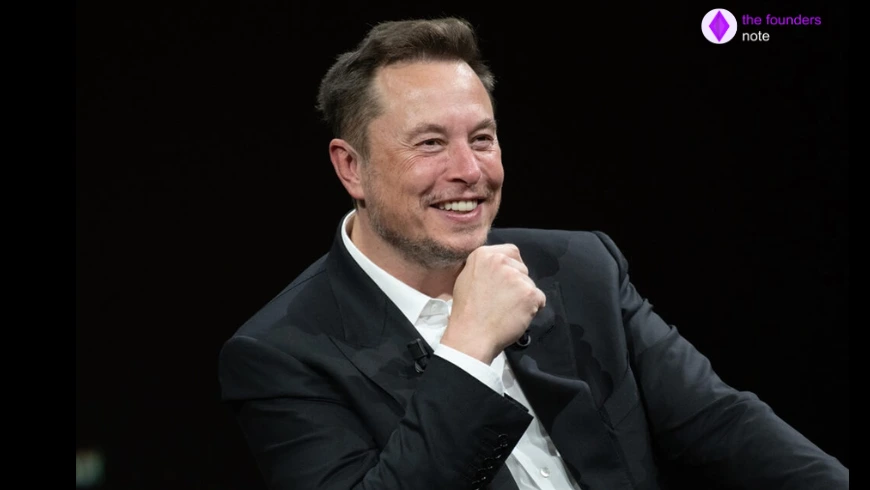
Elon Musk: From Zip2 to the World’s First Trillionaire
From a childhood video game sold for spare cash to becoming the first person in history worth over a trillion dollars — this is the full story of Tesla, SpaceX, X, xAI, Neuralink, and the man behind all of them.

Tesla & SpaceX
Early Life & Family Origins
Elon Reeve Musk was born on June 28, 1971, in Pretoria, South Africa, to Errol Musk, a South African engineer and businessman, and Maye Musk, a Canadian-born model and dietitian. He has a younger brother, Kimbal, and a younger sister, Tosca. Musk showed an early talent for computers and entrepreneurship: at age 12, he taught himself to code and created a video game called Blastar, which he sold to a computer magazine for approximately $500. He spent much of his childhood immersed in science fiction and science books, an early influence that biographers often trace directly to his later ambitions around space travel.
In 1988, after obtaining a Canadian passport through his mother, Musk left South Africa, citing both his unwillingness to complete compulsory military service under apartheid and his desire for the greater economic opportunities available in the United States and Canada. His early interests — renewable energy, space exploration, and the internet — would each go on to become the foundation of a separate company.
Education Foundations
Musk first attended Queen’s University in Kingston, Ontario, before transferring in 1992 to the University of Pennsylvania in Philadelphia, where he earned bachelor’s degrees in both physics and economics in 1997. He then enrolled in a graduate physics program at Stanford University in California — but left after just two days, convinced that the internet held far greater potential to reshape society than continued academic research in physics.
Zip2 & PayPal 1995–2002
In 1995, Musk cofounded Zip2, a company that provided maps and business directories to online newspapers, with his brother Kimbal and a friend, Greg Kouri. In 1999, computer manufacturer Compaq acquired Zip2 for $307 million, netting Musk roughly $22 million personally.
Musk then founded an online financial services company, X.com, which later merged with a rival payments firm, Confinity, and was renamed PayPal, specializing in transferring money online. The online auction giant eBay acquired PayPal in 2002 for $1.5 billion, with Musk’s stake worth an estimated $100 million or more — capital that would go on to fund both SpaceX and his early investment in Tesla.
Founding SpaceX 2002
Musk had long been convinced that for life to survive long-term, humanity needed to become a multiplanetary species — but he was dissatisfied with the extraordinary cost of existing rocket launch systems. In 2002, he founded Space Exploration Technologies Corp. (SpaceX) to build dramatically more affordable rockets, serving as CEO and chief engineer.
SpaceX’s first rocket, the Falcon 1, made its first launch attempt in 2006 and achieved its first fully successful flight in September 2008, followed by the larger Falcon 9 in 2010, both designed to undercut the cost of competing launch vehicles. A third rocket, the Falcon Heavy, launched in 2018 and was engineered to carry roughly 117,000 pounds (53,000 kg) to orbit — nearly double the capacity of its largest rival, Boeing’s Delta IV Heavy, at about one-third of the cost. SpaceX also became the first private company in history to send a spacecraft to the International Space Station, a milestone reached with an early Dragon cargo flight. The Falcon 9 and Falcon Heavy went on to dominate the global launch market; by 2024, more than half of all orbital launches worldwide were conducted by SpaceX.
Starship, Dragon & Starlink Next Generation
SpaceX has continued developing the successor to the Falcon 9 and Falcon Heavy: the Super Heavy–Starship system. The Super Heavy booster is designed to lift roughly 100,000 kg (220,000 pounds) to low Earth orbit, carrying the Starship spacecraft, intended for rapid transportation between cities on Earth and for building bases on the Moon and Mars. SpaceX is under contract to build the lunar lander for NASA’s Artemis program, targeting a crewed Moon landing by 2026.
SpaceX also developed the Dragon spacecraft, which resupplies the International Space Station and can carry up to seven astronauts; its first crewed flight, in 2020, carried astronauts Doug Hurley and Robert Behnken to the ISS. Separately, the company’s Starlink satellite network, launched in 2015 partly to help fund Musk’s Mars ambitions, has grown into the world’s largest satellite internet constellation. The FCC authorized SpaceX to launch 4,425 satellites in March 2018, with the first batch reaching orbit in May 2019 and commercial service rolling out in 2021. As of January 2026, Starlink operated 9,633 active satellites — more than half of all active satellites in orbit — serving more than five million subscribers as of 2025, alongside a military-grade version called Starshield used for secure U.S. defense communications.
Growth of Tesla 2004–Present
Musk had long been interested in electric vehicles, and in 2004 became one of the major early funders of Tesla Motors, founded by entrepreneurs Martin Eberhard and Marc Tarpenning; he joined the board and later became CEO and product architect in 2008. In 2006, Tesla introduced its first car, the Roadster, capable of 245 miles (394 km) per charge and a 0–60 mph time under four seconds — a sports car rather than the “stodgy” electric vehicles Musk felt had defined the category before it.
Tesla’s 2010 IPO raised about $226 million. The Model S sedan followed in 2012 to strong critical acclaim, then the Model X luxury SUV in 2015, and the more affordable Model 3 in 2017, which went on to become the best-selling electric car of all time. The Model Y crossover arrived in 2020, and the long-delayed Cybertruck pickup entered limited production in late 2023 after repeated setbacks from supply chain disruptions and design challenges, with a gradual rollout continuing through 2025. Tesla has also built multiple battery and vehicle “Gigafactories” worldwide and expanded into solar energy and battery storage through its acquisition of SolarCity and its Tesla Energy division.
The $1 Trillion Pay Package Nov 2025
In November 2025, Tesla shareholders approved a new compensation package for Musk potentially worth up to $1 trillion in stock over the next decade — one of the largest executive pay deals in corporate history. To collect the full award, Musk must hit a series of extraordinarily ambitious milestones, including growing Tesla’s market capitalization to roughly $8.5 trillion, about six times its 2025 value, alongside major expansion targets for Tesla’s robotics and autonomous-driving businesses. The vote followed months of public debate over executive pay and corporate governance, and reaffirmed Musk’s central role at the company he has led since 2008.
This wasn’t Musk’s first landmark Tesla pay fight: an earlier 2018 package, potentially worth $55 billion, was rescinded by a Delaware judge in January 2024 following a shareholder lawsuit, before a re-ratification vote in mid-2024 (which also moved Tesla’s incorporation from Delaware to Texas) and an eventual Delaware Supreme Court reversal in December 2025 that restored the original package.
The Twitter/X Saga 2018–2023
Musk joined Twitter in 2009 and, as @elonmusk, became one of its most-followed accounts, exceeding 85 million followers by 2022. In August 2018, he tweeted that he was considering taking Tesla private at $420 a share, claiming he had “secured funding” — a number widely read as a cannabis-culture joke. The U.S. Securities and Exchange Commission sued him for securities fraud the following month, alleging the tweets were false and misleading. After Tesla’s board initially rejected a settlement — reportedly under threat of Musk’s resignation — a harsher deal was struck: Musk stepped down as Tesla’s chairman for three years (while remaining CEO), agreed to have certain tweets pre-approved by company lawyers, and both he and Tesla paid $20 million fines.
Years later, critical of Twitter’s content-moderation policies, Musk disclosed a stake exceeding 9% of the company in April 2022. After briefly being offered a board seat, he instead launched a full takeover bid at $54.20 a share, valuing the deal at $44 billion, which Twitter’s board accepted. In July 2022, Musk attempted to withdraw the offer, citing insufficient information about bot accounts; Twitter sued to force the deal through, shareholders approved it in September, and Musk ultimately completed the $44 billion acquisition in October 2022.
Among his first moves as owner, Musk laid off roughly half of Twitter’s staff, introduced paid blue-checkmark verification at $8 a month, disbanded the company’s content-moderation body, and reinstated numerous previously banned accounts, including that of former U.S. President Donald Trump. Advertising revenue fell sharply as major companies pulled ads from the platform. Musk renamed the company X in July 2023, with tweets becoming “posts.”
OpenAI & the Falling Out 2015–2026
Musk has repeatedly warned that unrestricted AI development could pose what he has called the “biggest existential threat” to humanity. In 2015, he cofounded OpenAI as a nonprofit alongside Sam Altman and other investors, positioning it as a safety-focused counterweight to Google’s early AI dominance. Musk exited roughly three years later, citing a conflict of interest with Tesla’s own AI work; OpenAI’s leadership later said Musk had sought either to run a new for-profit arm of the company himself or merge it with Tesla.
In 2024, Musk sued OpenAI, Sam Altman, Greg Brockman, and major investor Microsoft, accusing them of abandoning the organization’s nonprofit founding mission. In February 2025, Musk led a consortium offering $97.4 billion to acquire OpenAI outright; the offer was rejected. A California federal court heard Musk’s core lawsuit in spring 2026, and a jury ultimately ruled against him, finding he had waited too long to file the claims — resulting in dismissal.
xAI & Grok 2023
Nine months after acquiring Twitter, Musk founded xAI in 2023, an artificial intelligence company building machine-learning models trained partly on data from X and other sources. Its flagship product, the AI assistant Grok, competes directly with OpenAI’s ChatGPT and Google’s Gemini. In 2026, xAI became a subsidiary of SpaceX, formally consolidating the AI venture under Musk’s broader corporate structure.
The Boring Company & Hyperloop 2016–Present
Frustrated by Los Angeles traffic, Musk proposed in late 2016 building an underground public transport system beneath the city, originally envisioning autonomous electric “skates” traveling at 125–150 mph through tunnels. The Boring Company began as a SpaceX division before spinning off as an independent business in 2018, the same year it completed a 1.14-mile test tunnel near SpaceX’s Hawthorne, California headquarters for under $10 million — a fraction of typical U.S. tunneling costs.
Its most prominent project, the Vegas Loop beneath the Las Vegas Convention Center, cost about $47 million to build and opened to the public in 2021, spanning 1.7 miles and shuttling passengers across the 200-acre campus in under two minutes — though using human-driven Tesla vehicles at up to 40 mph rather than the originally envisioned high-speed autonomous skates. Proposed tunnel projects in Baltimore, Chicago, Los Angeles, and Washington, D.C. were later shelved or discarded.
The Boring Company also oversees the long-discussed Hyperloop concept, which Musk first proposed in 2013 as a faster, cheaper alternative to California’s roughly $68 billion high-speed rail project — envisioning pods carrying 28 passengers between Los Angeles and San Francisco in 35 minutes at up to 760 mph through pneumatic tubes, for a projected $6 billion, with pods departing every two minutes to serve the roughly six million commuters who travel that route annually. Musk has said he lacks the bandwidth to personally pursue Hyperloop while running SpaceX and Tesla.
Ideology, Thoughts & Values Philosophy
Across his companies, Musk’s public statements reflect a consistent set of beliefs: that large-scale technological innovation is the most effective way to solve humanity’s biggest problems, that renewable energy should reduce the world’s dependence on fossil fuels, and that establishing a self-sustaining human presence on Mars is a civilizational insurance policy worth pursuing aggressively. He is widely known for setting extremely ambitious, often unmet timelines, and for a bold, high-risk decision-making style that has drawn both admiration and sharp criticism throughout his career.
Neuralink 2016
In 2016, Musk founded Neuralink with a team of eight neuroscientists, engineers, and biomedical researchers to develop “neural lace” brain-computer interface technology, partly inspired by the science fiction of Iain M. Banks. The initial goal was a medical device to treat neurological conditions such as epilepsy and paralysis, with Musk’s longer-term ambition being a brain chip that could help protect humans from potentially dangerous AI.
Following animal testing, Neuralink began human clinical trials in 2023, and by early 2024 had implanted its Telepathy chip in a 29-year-old quadriplegic patient, who was able to control a computer cursor, browse the web, and play chess using thought alone. A second patient, with a spinal injury, received an improved version of the implant later that year. Musk has said the company’s next product, Blindsight, is intended to help restore vision in patients with partial or complete blindness.
Politics & DOGE 2024–2025
Musk’s political views shifted rightward in the early 2020s, and he became one of the most prominent financial supporters of Donald Trump’s 2024 presidential campaign, spending hundreds of millions of dollars through his America PAC to back Trump and other Republican candidates. After Trump returned to office in 2025, Musk became a special government employee and helped lead the newly created Department of Government Efficiency (DOGE), aimed at cutting federal spending and streamlining government operations, including a much-criticized role in dismantling much of USAID.
DOGE’s actions triggered significant controversy and numerous lawsuits, with critics arguing it exceeded executive authority and disrupted essential government services, while supporters framed it as a long-overdue attack on wasteful spending. Musk stepped down from DOGE in May 2025 after publicly criticizing Trump’s proposed tax-and-spending legislation — which the nonpartisan Congressional Budget Office estimated could add trillions of dollars to the federal deficit — arguing it undermined DOGE’s own cost-cutting mission. In the weeks that followed, Musk and Trump traded public criticism, with Trump at one point threatening to revoke federal contracts held by Musk’s companies. Musk’s political activity also drew international scrutiny; a February 2025 NBC News analysis found he had boosted far-right political movements in at least 18 countries since 2023, and in February 2026 he publicly described Spanish Prime Minister Pedro Sánchez as a “tyrant” over a proposed social-media age restriction.
The SpaceX IPO & Becoming a Trillionaire June 2026
In June 2026, SpaceX completed its initial public offering, selling 555.6 million shares at $135 each — the largest IPO in history — raising $75 billion and valuing the company at approximately $1.77 trillion. When SpaceX shares began public trading, Musk’s fortune crossed the $1 trillion threshold for the first time, making him the first person in history to hold a net worth over $1 trillion. His wealth peaked at an intraday high above $1.4 trillion on June 16, 2026, before falling back under $1 trillion by June 23 as markets fluctuated; as of early July 2026, Forbes estimated his net worth at roughly $916 billion, with Bloomberg’s index placing it slightly higher at about $932 billion, derived primarily from his roughly 42% stake in SpaceX and 20% stake in Tesla.
Musk’s wealth climbed in dramatic steps over the preceding years: he first appeared on the Forbes Billionaires list in 2012 with a net worth of about $2 billion, crossed $300 billion in 2021, $400 billion in December 2024, $500 billion in October 2025, $600–700 billion across December 2025, $800 billion in February 2026, and $900 billion in June 2026, shortly before the SpaceX IPO pushed him past the trillion-dollar mark. His fortune is managed through his family office, Excession LLC, run by Jared Birchall since 2016. Tax records reviewed by journalists showed Musk paid roughly $455 million in taxes on $1.52 billion of income between 2014 and 2018, while ProPublica reported he paid no federal income tax in 2018 specifically, years in which much of his wealth existed as unrealized stock gains rather than taxable cash income.
Personal Life & Family Family
Musk has been married twice, to two different women, with one of those marriages occurring twice. He first married Canadian author Justine Wilson in 2000, whom he met at Queen’s University; the couple’s first son, Nevada, died of sudden infant death syndrome at ten weeks old in 2002. They went on to have twins, Griffin and Vivian, in 2004, and triplets, Kai, Saxon, and Damian, in 2006, before divorcing in 2008. Musk later married British actress Talulah Riley in 2010; the couple divorced in 2012, remarried in 2013, and divorced again in 2016.
Musk was in a long-term, on-and-off relationship with Canadian musician Grimes (Claire Boucher) from 2018 to 2022, with whom he shares three children. He has since had additional children with Neuralink executive Shivon Zilis, including twins born in 2021 and further children born in 2024 and 2026, and has been named in a publicly contested paternity claim involving a child born in 2024. Reporting has placed his total number of known children at 14, making his family life a subject of extensive public interest and periodic controversy, including a public estrangement from his daughter Vivian, who has legally changed her name and gender identity. Musk has spoken openly about believing declining birth rates pose a civilizational risk and has encouraged larger families generally.
Challenges & Controversies Scrutiny
Musk’s career has included numerous high-profile controversies alongside its successes. SpaceX faced multiple early rocket failures before Falcon 1’s first successful launch in 2008, and Tesla weathered serious financial strain during its early production ramp-ups. His 2018 “funding secured” tweets led directly to SEC fraud charges and fines. In 2018, after publicly disputing the practicality of a mini-submarine SpaceX and Boring Company employees built to help with a Thai cave rescue, Musk referred to diver Vern Unsworth as a “pedo” in a tweet, prompting a $190 million defamation suit; a jury later found Musk not liable.
His tenure leading DOGE and his broader political activity drew sustained criticism domestically and internationally, and his management style has been described as demanding, with long working hours and strict internal confidentiality requirements. Despite pledging in 2020 to “own no house,” a 2026 New York Times investigation identified dozens of companies holding real estate and aircraft for his personal use. He has also faced criticism for relatively limited traditional philanthropic giving relative to his wealth, a point his biographer Walter Isaacson has noted, though Musk has argued that funding ventures like renewable energy, space exploration, and AI safety research constitutes a more meaningful use of his capital than direct charitable giving.
Awards & Honors Recognition
| Year | Honor |
|---|---|
| 2019 | Forbes “World’s Most Innovative Leader” |
| 2020 | Axel Springer Award for achievements in technology and innovation |
| 2021 | TIME magazine “Person of the Year” |
| Multiple years | Repeated inclusion on TIME’s 100 Most Influential People list |
| Ongoing | National Space Society’s Robert A. Heinlein Memorial Award |
Quick Facts At a Glance
Full Name
Born
Nationality
Education
Major Companies
Founded SpaceX
Marriages
Children
Net Worth
Known For
Milestone Timeline Journey
Born in Pretoria, South Africa.
Leaves South Africa for Canada.
Graduates from the University of Pennsylvania with degrees in physics and economics.
Cofounds Zip2.
Zip2 sold to Compaq; founds X.com, later PayPal.
PayPal sold to eBay; founds SpaceX.
Becomes an early investor and board member at Tesla.
SpaceX successfully launches Falcon 1; Musk becomes Tesla CEO.
Cofounds OpenAI; launches the Starlink project.
Founds Neuralink and proposes The Boring Company.
SEC securities fraud settlement; Falcon Heavy’s first launch.
SpaceX’s Dragon carries astronauts to the ISS for the first time.
Acquires Twitter for $44 billion.
Twitter renamed X; founds xAI.
Leads DOGE under the Trump administration; steps down in May.
Shareholders approve a potential $1 trillion Tesla pay package.
SpaceX completes its IPO; Musk becomes the world’s first trillionaire.
Interesting Facts Trivia
First Venture
Degrees
Reusable Rockets
Over-the-Air Updates
Mars Ambition
Stanford Exit
Frequently Asked Questions FAQ
Who is Elon Musk?
Elon Musk is a South African-born American entrepreneur who leads SpaceX and Tesla, and has founded or acquired PayPal, X (formerly Twitter), xAI, Neuralink, and The Boring Company.
What is Elon Musk best known for?
He is best known for founding SpaceX and its reusable rockets, leading Tesla’s rise as a major electric vehicle maker, and, more recently, becoming the first person in history with a net worth exceeding $1 trillion.
Did Elon Musk really leave a PhD program after two days?
Yes. He enrolled in a graduate physics program at Stanford in 1995 but left almost immediately, judging that the internet offered greater near-term potential to change society.
Why did Elon Musk leave OpenAI?
He departed around 2018 citing a conflict of interest with Tesla’s own AI development; he later sued OpenAI in 2024 alleging it had abandoned its nonprofit mission, though a court ultimately dismissed his claims in 2026.
How many children does Elon Musk have?
Public reporting places the number at 14 known children across relationships with four women, though the exact figure and some details remain disputed or unconfirmed.
How did Elon Musk become the world’s first trillionaire?
His fortune crossed $1 trillion in June 2026 when SpaceX completed its IPO at a $1.77 trillion valuation, sharply increasing the value of his roughly 42% stake in the company.
From a Childhood Video Game to a Trillion-Dollar Fortune
Elon Musk’s story — from selling a self-made video game as a boy in Pretoria to becoming history’s first trillionaire — is a case study in relentless, high-risk ambition across payments, rockets, cars, AI, and social media all at once.