
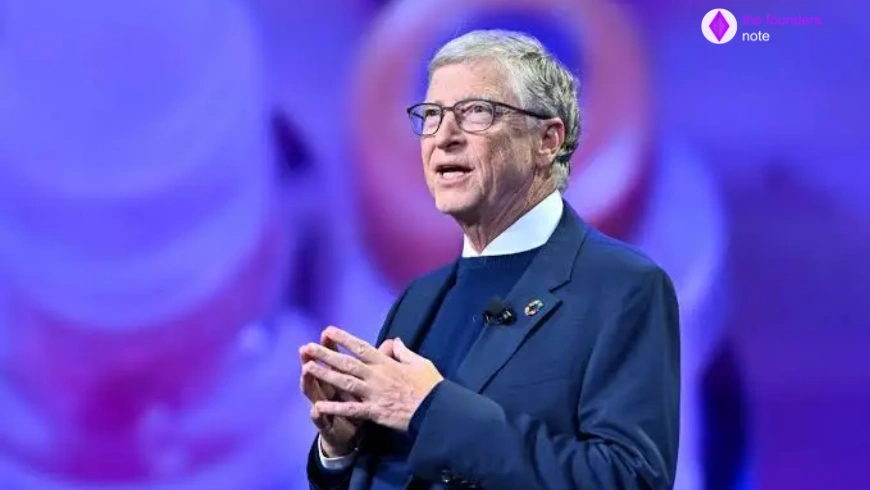
Bill Gates: The Complete Biography — Microsoft, Philanthropy & His Full Life Story
From a curious, encyclopedia-reading kid in Seattle to the co-founder of the world’s largest software company, and later one of history’s most consequential philanthropists — this is the complete Bill Gates story.

Bill Gates co-founded the world’s largest software company, ran it as chairman, CEO, and chief software architect, and then walked away from the day-to-day grind of business to build one of the largest charitable organizations on the planet. Not many people move between two such different kinds of influence in one lifetime. Fewer still leave a mark on both computing and global public health along the way.
Early Life in Seattle
William Henry Gates III came into the world in Seattle, the middle child and only son of Bill Gates Sr., a lawyer, and Mary Gates, who sat on the University of Washington’s board of regents. As a kid, he had this habit of rocking back and forth — something that stuck around long enough to become a bit of a personal trademark later in life. He was curious in a way that went beyond the usual. Family lore has it that “Trey,” as everyone called him, had worked through most of the family encyclopedia by age seven or eight.
Team sports never really grabbed him. Skiing did, and so did Boy Scouts. Card games with the family, though — that brought out a fierce competitive streak. He was small for his age and awkward around other kids, which meant plenty of teasing, and he responded by turning into something of a class clown. He was also stubborn enough, and rebellious enough, that his parents sent him to a psychologist while he was still in sixth grade.
Lakeside School and His First Program
Seventh grade brought a change of scenery: Lakeside School, a well-regarded private institution in Seattle. It’s where he touched a computer for the first time — not the kind we’d recognize today, but a teletype terminal wired by phone line to a mainframe sitting in a local General Electric office. He practically lived in that computer room. By thirteen, he’d written his first program, a bare-bones version of tic-tac-toe.
Lakeside is also where he met Paul Allen, two years older and wired the same way Gates was. The two of them, along with a handful of other students, started something called the Lakeside Programmers Club, taking on paid jobs writing payroll software and traffic-data programs for local businesses. Oddly enough, Gates also landed the lead in a school play at one point — not exactly what you’d expect from the future software mogul, and it caught more than a few classmates off guard.
Harvard and the Turning Point
Gates showed up at Harvard in 1973 with law school on his mind, at least on paper. In practice, computers still had all his attention. He skipped classes more often than he probably should have and crammed hard right before exams. He got friendly with a fellow student named Steve Ballmer, and the two of them spent more than a few nights at the poker table.
The real hinge point in Gates’s life came during his sophomore year, when Allen showed up on campus with a magazine in hand. Inside was a story about the Altair 8800 — one of the first microcomputers ever built, made by a small outfit called MITS — and the thing had no software to run on it. Gates and Allen saw the opening and told MITS they already had software ready to go. That wasn’t quite true yet. Over about five weeks in the winter of 1975, working around the clock, the two of them adapted a version of BASIC to run on the machine. Allen flew out and demoed it at MITS’s New Mexico office; it worked, and MITS agreed to bundle it with every Altair sold, paying royalties on each one.
Founding Microsoft
Allen went to work at MITS for a stretch. Gates took a leave from Harvard, came back briefly, then left school for good and moved out to New Mexico, where the fledgling company was based. He was putting in sixteen-hour days by most accounts, and when the stress built up, he’d go drive fast through the desert outside town. By 1979 the business had outgrown New Mexico, so Gates moved it to Bellevue, a Seattle suburb — and talked Ballmer into joining him there in a senior role, largely on the strength of a stock-option promise.
The IBM Deal and MS-DOS
1980 brought the deal that changed everything. IBM came to Microsoft looking for a program to run on its upcoming personal computer. The prevailing wisdom at the time treated software as an afterthought to hardware — Gates never bought into that. He paid $75,000 for an existing operating system, reworked it for IBM’s machine, and the result — MS-DOS — shipped with every IBM PC sold. The licensing deal Microsoft struck also let it sell the same software to other computer makers, and within a couple of years, MS-DOS was simply the industry standard. By the close of 1982, Microsoft had sold something like $32 million worth of software.
Taking the Helm at Microsoft
When Allen stepped away from the company in 1983 for health reasons, Gates took sole control. People underestimated him early on — he looked young, dressed messily, and didn’t exactly carry himself like a corporate titan. That changed as Microsoft grew and Gates grew into the job alongside it. He built a reputation as a sharp, sometimes brutal competitor, and that reputation came with plenty of enemies attached. He liked recruiting top graduates himself and often sat in on their interviews personally. The office culture was casual — flexible hours, jeans over suits — but underneath that, the pace was relentless. Gates worked long hours and rarely took time off. He could be blunt to the point of rudeness, and he had little patience for people who couldn’t keep up with him technically. Still, he preferred a sweater to a blazer, and about the only perk he insisted on was a reserved parking spot, just so he wouldn’t miss flights.
Windows, Growth, and Becoming a Billionaire
Microsoft kept growing through the 1980s, crossing $140 million in sales by 1985. The company went public in 1986, and not long after, Gates became the youngest billionaire on the planet. By 1987, Microsoft was the biggest software company in the world, and Gates liked pointing out that he’d never once borrowed money from his family to get there.
Money didn’t slow him down. Windows 3.0 launched in 1990 and took off — people could finally run several programs at once and actually click their way around instead of memorizing commands. Each new version of Windows built on the last. Gates was slow to see how big the internet would become, but he eventually got Microsoft’s own browser, Internet Explorer, bundled into Windows 95. For a while, it was the most-used browser in the world.
Personal Life and Marriage
Even with Microsoft eating up most of his time, Gates dated — most notably Ann Winblad, a businesswoman he stayed close friends with long after they stopped seeing each other. In 1987, Microsoft brought on a manager named Melinda French, and she caught his attention pretty quickly. They married in Hawaii on New Year’s Day, 1994, and went on to have three kids. Eventually, the family settled into a 45-room house on the shore of Lake Washington in Medina — a home that reportedly cost more than $50 million to build.
The Microsoft Antitrust Case
On May 18, 1998, the Justice Department and twenty state governments filed suit against Microsoft, accusing the company of pressuring PC makers into using its browser instead of rivals’. Gates didn’t take the stand himself; his lawyers instead played a recorded deposition in which he claimed not to know much about key decisions inside his own company. That didn’t land well — a lot of people found it hard to swallow that he was really that removed from the business he’d built. The trial judge ordered Microsoft broken into two companies, but an appeals court reversed that, and the case eventually ended in a settlement. The breakup never actually happened.
Stepping Back from Microsoft
Gates held onto the chairman and CEO titles until 2000, when Ballmer took over as CEO and Gates shifted into the role of chief software architect while staying on as chairman. In June 2006, Microsoft announced Gates would step away from daily involvement starting in mid-2008, though he’d keep advising on a handful of projects. By 2014 he’d given up the chairmanship entirely, moving into a technology-advisor role and helping Satya Nadella get settled as the new CEO.
The Gates Foundation
With less on his plate at Microsoft, Gates poured more time into the Gates Foundation — called the Bill and Melinda Gates Foundation until January 2025 — which he’d started with Melinda French Gates back in 2000. The foundation’s focus sits on global health, education, and cutting poverty, with programs running in the US and more than a hundred other countries. By 2014, it was sitting on an endowment north of $40 billion. Gates has also joined the Giving Pledge, a commitment signed by over a hundred of the world’s wealthiest people to give away at least half their fortunes, whether during their lifetimes or after.
Climate Change and Clean Energy
Through much of the 2010s, climate change and alternative energy became a real focus for Gates. In 2015, he put $2 million toward clean energy research and pushed governments and private investors to do the same, arguing that speeding up clean-energy research was really the only workable path away from catastrophic climate change. In one interview, he got specific — suggesting the US should more than double its annual energy research budget, from $6 billion to $12 billion, over five years.
Health Research and Covid-19
Infectious disease research has been another long-running interest. In 2017, he made his first move into non-communicable disease research, putting $100 million toward organizations studying dementia and Alzheimer’s. When Covid-19 hit, the Gates Foundation moved fast — a $100 million pledge in February 2020 toward vaccine development, on top of an earlier $10 million commitment, followed by another $250 million pledge that December.
Divorce and Foundation Changes
March 2020 saw Gates step down from Microsoft’s board entirely, freeing him up to focus on climate, health, and education work full time. By December, he was calling for a dedicated government institute for clean energy research, and that same month he became the largest private owner of farmland in the US — a fact that surprised plenty of people when it came out. His clean-energy push kept going too: in 2024, TerraPower, a nuclear company he’d founded back in 2008 and chaired ever since, broke ground on a new plant built around an advanced reactor design.
On the personal side, Bill and Melinda French Gates finalized their divorce in August 2021, a few months after announcing they were separating, closing out 27 years of marriage. Both stayed involved with the foundation for a while afterward, but once Melinda French Gates stepped away in the summer of 2024, Gates became its sole chairman.
2025: Source Code, USAID, and an AI Venture
Early 2025 brought Gates’s first memoir, “Source Code,” with proceeds going to United Way. That May, he made a bigger announcement: the Gates Foundation would close for good on December 31, 2045, and he’d spend the two decades leading up to that giving away nearly everything he had left. He also spoke out against the Trump administration’s cuts to USAID that year, including reductions to the PEPFAR program, warning that as many as 500,000 children could die without continued access to HIV and AIDS treatment.
Separately, Gates joined four other billionaires in committing over a million dollars to Nextlader Ventures and its partner Anthropic, backing an effort to use AI to improve life for low-income Americans and steer funding toward nonprofits and companies working on the same problem.
Legacy and Significance
Back when the industry was still finding its feet, Gates already saw where computing was headed — into everyday use, everywhere — and understood that software, not hardware, would be what mattered most. That bet paid off. His products turned computers into something ordinary people could actually use, gave businesses a common way to talk to each other digitally, and, in the process, made information more accessible than it had ever been.
He’s an unusual mix: deep technical chops paired with real business instinct, which is part of why he’s become something of a stand-in for what it takes to succeed in the modern economy. He’s also pushed a lot of his own money — and a lot of other people’s — toward giving it away. People will always argue about what kind of person he is. What he’s changed about the world is a lot harder to argue with.
Awards and Wealth Rankings
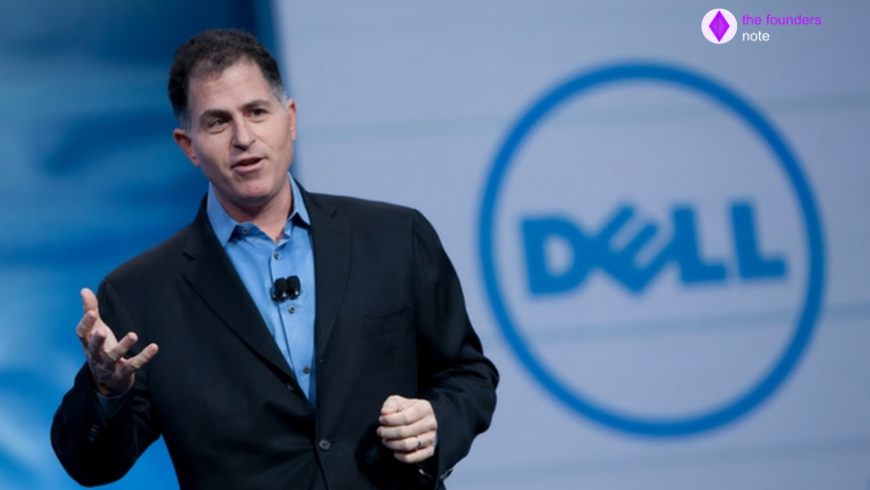
Late 2016 brought Bill and Melinda French Gates the Presidential Medal of Freedom, recognizing their foundation work. The following year, Gates topped Forbes’ billionaires list — something he’d done 18 times over the previous 23 years — with a net worth of $86 billion. By 2019 he’d slipped to second, behind Amazon’s Jeff Bezos at $95.6 billion. His ranking kept drifting down through the early 2020s, though he stayed comfortably in the top ten. By 2025, after restructuring his wealth to line up with his philanthropic plans for the foundation, he’d fallen to twelfth place, behind Dell’s Michael Dell at $116.9 billion.
2016
Presidential Medal of Freedom, with Melinda French Gates
2017
#1 on Forbes billionaires list, net worth $86B
2019
#2 on Forbes list, behind Jeff Bezos ($95.6B)
2025
#12 on Forbes list, after wealth restructuring for philanthropy
Frequently Asked Questions
Who is Bill Gates?
Bill Gates is an American entrepreneur and philanthropist best known as the co-founder of Microsoft, the world’s largest software company. He served as its chairman, CEO, and chief software architect, and later co-founded the Gates Foundation, one of the world’s largest charitable organisations.
How did Bill Gates start Microsoft?
Gates founded Microsoft with his childhood friend Paul Allen in 1975 after reading about the Altair 8800, one of the first microcomputers, which lacked software. The two adapted a version of BASIC for the machine, and after a successful demonstration, its maker, MITS, agreed to distribute it — leading Gates and Allen to start what they first called Micro-Soft.
Why did Bill Gates drop out of Harvard?
Gates enrolled at Harvard in 1973 intending to study law but remained focused on computers. After the opportunity to build software for the Altair 8800 emerged, he took a leave of absence and eventually dropped out permanently to move to New Mexico and build Microsoft full time.
What was the Microsoft antitrust case about?
In May 1998, the US Department of Justice and twenty states sued Microsoft, alleging it pressured computer makers to use Internet Explorer over competitors’ browsers. A judge initially ordered Microsoft split into two companies, but this was reversed on appeal and the case was settled without a breakup.
What is the Gates Foundation?
The Gates Foundation, known as the Bill and Melinda Gates Foundation until January 2025, is a philanthropic organisation Gates founded with Melinda French Gates in 2000. It funds global health, education, and poverty-reduction work in the US and more than 100 countries, and plans to close permanently on 31 December 2045.
Are Bill Gates and Melinda French Gates divorced?
Yes. They announced their separation in May 2021 and finalised their divorce in August 2021, after 27 years of marriage. Melinda French Gates stepped away from the Gates Foundation in the summer of 2024.
What are Bill Gates’s plans for his wealth?
Gates has signed the Giving Pledge, committing to give away at least half his fortune to charity. In May 2025, he announced plans to give away nearly all of his remaining wealth over the next twenty years and to permanently close the Gates Foundation on 31 December 2045.
Tremendous issues here. I’m very happy to see your article.
Thanks so much and I’m taking a look ahead to touch you.
Will you kindly drop me a e-mail?
I am extremely impressed together with your writing abilities and also with the layout to your blog.
Is that this a paid subject matter or did you modify it your self?
Anyway keep up the excellent quality writing,
it is rare to peer a nice weblog like this one these days..
Terrific post however I was wanting to know if you could
write a litte more on this topic? I’d be very grateful if you could elaborate a little bit
further. Cheers!
An outstanding share! I have just forwarded this onto a co-worker who had been conducting a
little homework on this. And he in fact ordered me lunch because
I discovered it for him… lol. So let me reword this….
Thank YOU for the meal!! But yeah, thanx for spending the time to discuss this subject here on your web site.
What’s up it’s me, I am also visiting this site on a regular basis,
this site is genuinely nice and the people are truly sharing good thoughts.
I am regular visitor, how are you everybody? This piece of writing posted at this web
page is genuinely pleasant.
Wonderful, what a weblog it is! This webpage provides helpful facts to us, keep it up.
With thanks! I like it!
Feel free to surf to my web-site :: https://helloworld.in/