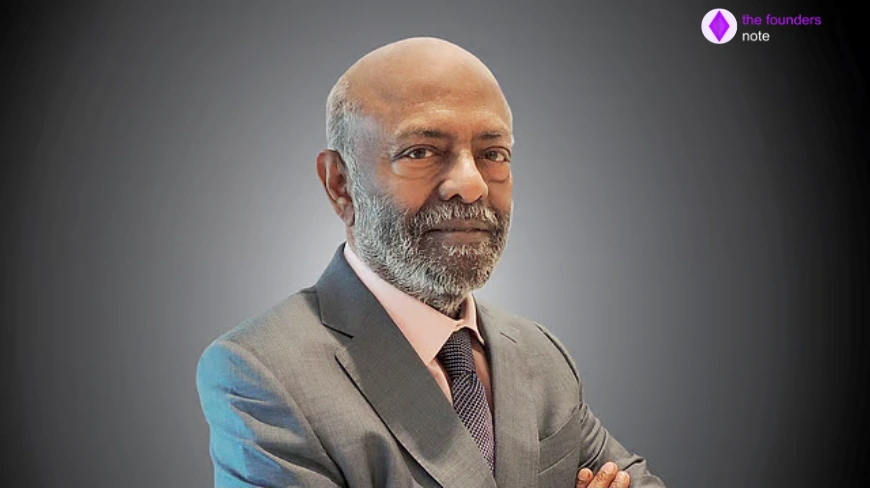

Mukesh Ambani: From a Stanford Dropout to India’s Most Valuable Conglomerate
From supervising a petrochemical plant at 24, to building the world’s largest refining complex, to putting a smartphone and cheap 4G data into the hands of hundreds of millions of Indians — this is the complete story of Reliance Industries’ chairman.

Reliance Industries
Early Life & Family Origins
Mukesh Dhirubhai Ambani was born on April 19, 1957, in Aden, in what was then the Aden Colony (present-day Yemen), where his father, Dhirubhai Ambani, was working before returning the family to India. In 1958, the Ambanis settled in Mumbai, where Dhirubhai began building the trading business that would eventually become Reliance Industries. During his childhood, Mukesh lived in a modest Mumbai apartment and grew up watching his father’s entrepreneurial journey firsthand.
Education Foundations
Ambani completed his schooling at Hill Grange High School on Peddar Road, Mumbai, alongside his brother and Anand Jain, who later became a close business associate. He went on to St. Xavier’s College, Mumbai, for his senior secondary and pre-university education, before earning a Bachelor of Engineering (BE) degree in chemical engineering from the Institute of Chemical Technology (ICT), Mumbai — then known as the University Department of Chemical Technology (UDCT) — completing the four-year program in the late 1970s.
In 1979, Ambani moved to the United States to pursue an MBA at Stanford University’s Graduate School of Business, where he was influenced by professors including William F. Sharpe and Man Mohan Sharma, whom he has credited with teaching him to “think out of the box.” In 1980, with his father’s health deteriorating and Reliance still a small but fast-growing enterprise, Ambani withdrew from the program before completing it and flew back to Mumbai — a decision his father reportedly encouraged, believing real-world experience taught more than a classroom could.
Joining Reliance Industries 1981
At age 24, Ambani officially joined Reliance Industries Limited in 1981. At the time, Reliance was primarily a textile company built around its Vimal fabric brand. His first major responsibility was supervising the construction of the Patalganga petrochemical plant — an early, large-scale industrial project that marked the beginning of his hands-on leadership in industrial development. From there, he played a central role in expanding the business into polyester, petrochemicals, oil and gas, refining, and broader manufacturing.
Building a Manufacturing Giant 1985–1999
Through the late 1980s and 1990s, Ambani led the expansion of Reliance’s manufacturing operations across polyester, petrochemicals, plastics, and chemicals, helping create one of India’s largest integrated petrochemical businesses. He took an increasingly central role in the company as his father’s health declined in the late 1980s.
The Jamnagar Refinery 1999
One of Ambani’s signature achievements during this period was developing the Jamnagar Refinery Complex in Gujarat, which became operational in 1999 and grew into one of the world’s largest integrated petroleum refining facilities, significantly strengthening Reliance’s position in the global energy industry.
Becoming Chairman & Managing Director 2002
Following the death of Dhirubhai Ambani on July 6, 2002, Mukesh Ambani became Chairman and Managing Director of Reliance Industries Limited. Under his leadership, the company began expanding far beyond oil, petrochemicals, and refining, into retail, telecommunications, digital services, and technology investments.
The 2005 Reliance Group Demerger 2005
In 2005, the broader Reliance business empire was formally divided between Mukesh Ambani and his younger brother, Anil Ambani, with their mother, Kokilaben, playing a key role in resolving the split. Mukesh retained control of Reliance Industries — oil and gas, petrochemicals, refining, and exploration — while Anil took over telecom, power, financial services, and entertainment under the separate Reliance Group (Anil Dhirubhai Ambani Group, or ADAG). The restructuring let Mukesh Ambani focus on scaling Reliance Industries into a diversified global enterprise on its own terms.
Reliance Retail 2006–Present
Ambani launched Reliance Retail in 2006, beginning with grocery stores and rapidly expanding into fashion, consumer electronics, pharmacy, luxury retail, and e-commerce. Today the business operates under a wide range of formats and brands, including Reliance Fresh, Reliance Smart, Reliance Smart Bazaar, Reliance Trends, Reliance Digital, Reliance Jewels, AJIO, Tira Beauty, JioMart, and Reliance Consumer Products, making Reliance Retail India’s largest retailer by both revenue and store network.
Mumbai Indians & the IPL 2008
In 2008, Ambani acquired the Mumbai Indians franchise in the newly launched Indian Premier League (IPL). Under his ownership, the team went on to become one of the most successful franchises in IPL history.
Launching Reliance Jio 2016
Between 2010 and 2015, Ambani invested heavily in fiber-optic infrastructure, broadband, digital connectivity, and spectrum acquisition — groundwork that laid the foundation for Reliance Jio. In September 2016, Reliance Jio launched commercially, transforming India’s telecommunications industry almost overnight by introducing affordable 4G internet, free voice calling, high-speed mobile data, and a broader digital ecosystem of apps and services. The launch dramatically accelerated digital adoption across India and reshaped the competitive dynamics of the entire telecom market. As of 2026, Jio serves over 530 million subscribers, making it India’s largest telecom operator.
Jio Platforms & Digital Ecosystem 2018–2023
Reliance expanded its digital ecosystem well beyond mobile telecom through Jio Platforms, JioFiber, JioMart, digital payments, cloud computing, artificial intelligence, and enterprise digital solutions, alongside apps including MyJio, JioCinema, JioTV, and JioCloud. The strategy attracted major global investment: leading international technology and private equity firms poured billions of dollars into Jio Platforms during this period, validating Reliance’s broader digital ambitions.
Jio Financial Services 2023
Reliance further expanded into financial services through Jio Financial Services, covering digital lending, insurance distribution, asset management, and payments. The business was listed as a separate, independently traded company in 2023, meaning its financials are now reported apart from Reliance Industries’ own results.
Green Energy & AI Investments 2023–2026
From 2023 onward, Ambani announced ambitious investments spanning renewable energy, green hydrogen, solar manufacturing, battery storage, artificial intelligence, data centers, and semiconductor and digital infrastructure — investments aimed at positioning Reliance among the world’s leading technology and energy companies over the coming decade. As of 2026, these New Energy businesses remain in an active build-out phase and are not yet a major standalone revenue contributor, though they are expected to become key long-term growth drivers.
Reliance’s Business Portfolio 2026
By 2026, Reliance Industries operates across seven broad business areas: Oil-to-Chemicals (O2C), covering fuels, polymers, and petrochemicals; Reliance Retail, spanning grocery, fashion, electronics, pharmacy, beauty, and e-commerce; Jio Platforms, covering mobile, fiber broadband, AirFiber, enterprise, and cloud services; Oil & Gas exploration and production, centered on the KG-D6 basin; Media & Entertainment, including television, streaming, sports broadcasting, and film production (via JioStar and related ventures); New Energy, covering solar manufacturing, battery storage, and green hydrogen; and Financial Services, through the separately listed Jio Financial Services.
RIL Financial Performance, FY2025–26 Numbers
For the 2025–26 fiscal year, Reliance Industries reported total revenue of ₹11,75,919 crore, EBITDA of ₹2,07,911 crore, and net profit of ₹95,754 crore — making Reliance the first Indian company ever to cross US$10 billion in annual net profit.
| Business Segment | FY2025–26 Revenue |
|---|---|
| Oil-to-Chemicals (O2C) | ₹6,62,401 crore |
| Reliance Retail | ₹3,71,085 crore |
| Jio Platforms (Digital Services) | ₹1,46,085 crore |
| Media & Entertainment | ₹40,682 crore |
| Oil & Gas (E&P) | ₹23,861 crore |
Family Details & Family Tree Family
Mukesh Ambani’s father, Dhirubhai Ambani (born December 28, 1932; died July 6, 2002), founded Reliance Industries, building it from a textile trading business into one of India’s largest industrial groups, and is widely regarded as one of India’s greatest entrepreneurs. His mother, Kokilaben Ambani, is a homemaker and the family’s matriarch, who played a key role in resolving the 2005 division of the business between her two sons.
Mukesh’s younger brother, Anil Ambani, chairs the Reliance Group (Anil Dhirubhai Ambani Group), and is married to former actress Tina Ambani; the couple have two sons, Jai Anmol Ambani and Jai Anshul Ambani. Mukesh also has two younger sisters: Nina Kothari, chairperson of Kothari Sugars and Chemicals, and Dipti Salgaocar, who is married to businessman Dattaraj Salgaocar.
Mukesh married Nita Ambani (née Dalal) in 1985; she is the founder and chairperson of Reliance Foundation, an educationist and philanthropist, founder of the Dhirubhai Ambani International School, and a former member of the International Olympic Committee (IOC). The couple have three children — twins Akash and Isha Ambani (born October 23, 1991) and youngest son Anant Ambani (born April 10, 1995).
Akash Ambani serves as Chairman of Reliance Jio Infocomm Limited, leading the company’s telecom and technology businesses; he married Shloka Mehta in 2019, and the couple have two children, Prithvi and Veda. Isha Ambani is a Director at Reliance Retail Ventures and is associated with Jio Financial Services and Reliance’s broader consumer businesses; she married Anand Piramal in 2018, and they have two children, Krishna and Aadiya Piramal. Anant Ambani serves as Executive Director at Reliance Industries, overseeing energy and new-energy initiatives; he married Radhika Merchant in July 2024, in one of India’s most widely covered wedding celebrations.
Personal Life Family Life
Mukesh Ambani’s children have taken on increasingly prominent leadership roles across Reliance’s business empire in recent years, reflecting a structured, ongoing succession plan: Akash leads telecom, digital, and AI initiatives through Jio; Isha is focused on retail and consumer businesses; and Anant oversees energy and new-energy ventures. Notably, Mukesh Ambani’s own three children have pursued higher education at prestigious institutions including Brown University, Yale, and Stanford, continuing the family’s long-standing emphasis on education.
Net Worth Through the Years Wealth
Mukesh Ambani’s wealth is drawn overwhelmingly from his roughly 44.7 percent stake in Reliance Industries Limited, alongside promoter-entity holdings across the company’s retail, digital, media, and energy businesses. According to Forbes’ Real-Time Billionaires List, his net worth stood at approximately $27 billion in 2010, $18.9 billion in 2015 (reflecting a period of pressure on Reliance’s core energy business), before surging as Jio and Reliance Retail scaled: $88.7 billion in 2020, $92.7 billion in 2021, $88 billion in 2022, $92 billion in 2023, $116 billion in 2024, and $105 billion on the 2025 Forbes India’s Richest list. As of July 2026, Forbes’ real-time tracker placed his net worth at approximately $88.7 billion — equivalent to roughly ₹7.6 lakh crore at an exchange rate of about ₹86 per U.S. dollar — ranking him around 24th among the world’s richest people and among the wealthiest business leaders in Asia. Because Forbes primarily reports Mukesh Ambani’s individual wealth rather than a combined family figure, there is no single officially published “Ambani family net worth,” even though much of the broader family’s wealth is tied to the same publicly listed Reliance Industries shares.
Net Worth & Revenue Growth Interactive Chart
The chart below tracks Mukesh Ambani’s estimated personal net worth alongside Reliance Industries’ total annual revenue, year by year, drawn from Forbes’ Real-Time Billionaires List and RIL’s published annual financial statements. Use the toggle buttons to isolate either series, and hover or tap any point for the exact figure.
Net worth figures are Forbes’ historical estimates for Mukesh Ambani individually. Reliance Industries revenue figures are drawn from RIL’s published consolidated annual results (converted to ₹ lakh crore); years prior to 2010 are omitted as directly comparable consolidated figures are less consistently available. Figures are approximate and meant to illustrate overall trend, not exact point-in-time equivalence.
FY2025–26 Revenue by Business Segment
Segment revenue for FY2025–26, drawn from Reliance Industries’ published segment-wise results. Hover or tap any bar for the exact figure.
Jio Platforms (Telecom) Valuation Growth Interactive Chart
The chart below tracks Jio Platforms’ estimated valuation from its 2020 fundraising round — when Facebook, Google, Silver Lake, KKR, and other global investors bought stakes — through its 2026 IPO filing with India’s market regulator, SEBI.
2020 reflects Jio Platforms’ equity valuation following its landmark stake sales to Facebook, Google, Silver Lake, KKR, and other global investors (~₹4.90 lakh crore). 2025 reflects Reuters-reported banker valuations ahead of the IPO process; 2026 reflects the ~$131–137 billion valuation implied by Jio Platforms’ DRHP filing with SEBI in June 2026. Years in between are approximate, interpolated trend estimates, since Jio did not raise fresh primary equity or publish a formal valuation in that window.
Jio Payments Bank Growth Interactive Chart
Jio Payments Bank — a joint venture that became a wholly owned subsidiary of Jio Financial Services after it bought out the State Bank of India’s remaining stake in 2025 — does not publish a standalone net-worth or profit series the way a listed bank would. The clearest year-over-year public metrics are its customer base and its CASA-plus-wallet deposit base, charted below.
Figures are drawn from Jio Financial Services’ quarterly and annual disclosures. FY2024 (March 2024) figures are approximate, back-calculated from the reported year-on-year growth multiples disclosed for FY2025. Jio Payments Bank’s authorized capital is ₹750 crore; it is now 100% owned by Jio Financial Services following its ₹104.54 crore purchase of SBI’s remaining 18.47% stake in 2025.
Significance & Legacy Impact
Mukesh Ambani’s career has repeatedly bet on scale: the world’s largest integrated refining complex at Jamnagar, India’s largest retail network through Reliance Retail, and — through Reliance Jio — arguably the single biggest catalyst for mass mobile-internet adoption in Indian history, having taken India from a country where mobile data was scarce and expensive to one of the cheapest and most connected mobile-data markets in the world. Having taken over Reliance amid the 2002 loss of his father and navigated the 2005 split of the broader Reliance empire with his brother, Ambani steered the company from a primarily energy and petrochemicals business into a diversified conglomerate spanning retail, telecom, digital services, media, and financial services — with green energy, AI infrastructure, and semiconductors now positioned as its next major growth frontier, even as day-to-day leadership of individual business verticals increasingly passes to his three children.
Quick Facts At a Glance
Full Name
Born
Education
Current Position
Company Founded By
Ownership Stake
Spouse
Children
Est. Net Worth
Global Rank
Milestone Timeline Journey
Born in Aden, Yemen.
Family moves to Mumbai as Dhirubhai Ambani builds his trading business.
Reliance begins textile manufacturing under the Vimal brand.
Reliance Industries becomes a publicly listed company.
Enrolls in Stanford’s MBA program; withdraws in 1980 to help build Reliance.
Joins Reliance Industries; supervises construction of the Patalganga petrochemical plant.
Marries Nita Ambani (née Dalal).
Jamnagar Refinery becomes operational.
Becomes Chairman & Managing Director of Reliance Industries after his father’s death.
Reliance Group demerger splits the empire between Mukesh and Anil Ambani.
Launches Reliance Retail.
Acquires the Mumbai Indians IPL franchise.
Launches Reliance Jio, transforming India’s telecom industry.
Expands Jio Platforms, Reliance Retail, and consumer and financial services; attracts major global tech investment.
Jio Financial Services is listed as a separate company.
Youngest son Anant Ambani marries Radhika Merchant.
Major new investments in AI, green energy, data centers, and digital infrastructure; RIL crosses $10 billion in annual net profit.
Estimated net worth of $88.7 billion; continues leading Reliance while overseeing a structured succession plan across his three children.
Frequently Asked Questions FAQ
Who is Mukesh Ambani?
Mukesh Ambani is the Chairman and Managing Director of Reliance Industries Limited, India’s largest private-sector conglomerate, which he has led since 2002 following the death of his father and company founder, Dhirubhai Ambani.
Did Mukesh Ambani graduate from Stanford?
No. He enrolled in Stanford’s MBA program in 1979 but withdrew in 1980, before completing the degree, to return to India and help build Reliance as his father’s health declined.
What is Mukesh Ambani’s net worth?
As of July 2026, Forbes’ Real-Time Billionaires List estimated his net worth at approximately $88.7 billion, ranking him around 24th among the world’s richest people.
What is Reliance Jio?
Reliance Jio is Reliance Industries’ telecommunications arm, launched in 2016, which transformed India’s mobile market by offering affordable 4G data and free voice calling; it now serves more than 530 million subscribers as India’s largest telecom operator.
How did the Ambani family business split happen?
In 2005, the broader Reliance empire was divided between Mukesh and his younger brother, Anil Ambani, with Mukesh retaining Reliance Industries (energy, petrochemicals, refining) and Anil taking over telecom, power, financial services, and entertainment under a separate Reliance Group.
Who are Mukesh Ambani’s children, and what do they do?
He has three children with wife Nita Ambani: twins Akash (Chairman, Reliance Jio Infocomm) and Isha (Director, Reliance Retail Ventures), and youngest son Anant (Executive Director, Reliance Industries, overseeing energy initiatives).
What was the Jamnagar Refinery?
It’s a massive integrated petroleum refining complex in Gujarat that became operational in 1999 under Ambani’s leadership, growing into one of the largest refining facilities in the world.
From Petrochemical Plants to a Digital Nation
From supervising the construction of a single petrochemical plant in his twenties to putting affordable mobile internet into the hands of hundreds of millions of Indians, Mukesh Ambani’s career has been a decades-long bet that scale — in refining, in retail, and in data — could reshape an entire country’s economy.