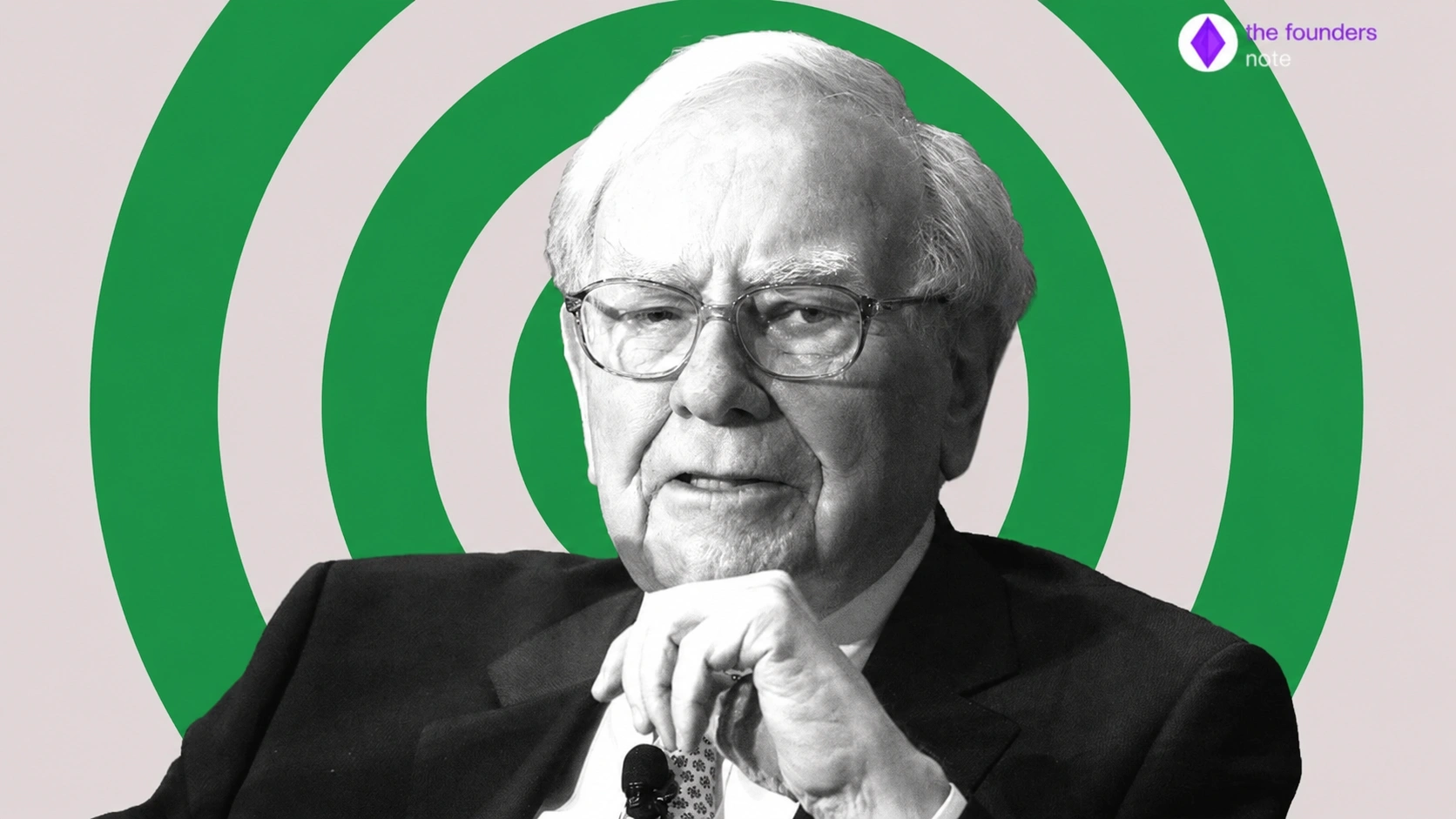
Warren Buffett: The Oracle of Omaha
From a paperboy selling used golf balls in Nebraska to the most quoted investor of his generation — this is the full story of the man who turned a failing textile mill into one of the most valuable companies on Earth.

Berkshire Hathaway
Early Life & Family Origins
Warren Edward Buffett was born on August 30, 1930, in Omaha, Nebraska, the second child and only son of Howard Homan Buffett, a stockbroker who later became a U.S. Representative for Nebraska, and Leila Stahl Buffett. Leila had grown up helping at her family’s newspaper, the Cuming County Democrat, and it was that background that led her to the offices of the Daily Nebraskan student paper in Lincoln, where she was hired — and where she met Howard, then the paper’s editor. The two fell in love, married, and both went on to graduate college together.
Warren showed business instincts remarkably early. He worked as a paperboy and as a stocker in his uncle’s grocery store, and by the time he finished high school he had already saved and invested enough money to buy a 40-acre farm outside Omaha — an extraordinary feat for a teenager in the 1940s.
Education Foundations
Following his congressman father’s influence, Buffett first enrolled at the University of Pennsylvania’s Wharton School. After two years, he chose to transfer and complete his bachelor’s degree at the University of Nebraska–Lincoln instead, graduating in 1950 with a B.S. in business administration.
At Nebraska, his entrepreneurial instincts resurfaced in an unusual way: he placed ads in the Daily Nebraskan offering a bounty for used golf balls, which he would then clean up and resell at a discount to retail price. When his local supply couldn’t keep up with demand, he found a wholesale supplier in Chicago, buying “classy” used balls for $3.50 a dozen and reselling them for $6 — a tidy profit while still undercutting new-ball prices for customers. He later credited a Nebraska accounting professor, Ray Dein, with giving him the tools that shaped the rest of his career, once calling accounting “the language of business.”
After Nebraska, Buffett pursued a master’s degree at Columbia University’s School of Business, where he studied directly under Benjamin Graham, the father of value investing, earning his M.S. in 1951. Graham’s principles — buying assets for meaningfully less than their intrinsic worth, and demanding a “margin of safety” — became the foundation of Buffett’s entire investment philosophy.
Early Career & First Ventures 1951–1965
After Columbia, Buffett briefly worked at his father’s brokerage and later for Benjamin Graham’s investment firm in New York before returning to Omaha in 1956 to start the Buffett Partnership, an investment vehicle funded by family and friends. One of his earliest major successes came in the late 1960s with the acquisition of National Indemnity Company and National Fire and Marine Insurance Company, both of Omaha — insurance businesses that would later become central to Berkshire’s financial engine.
Where many competitors cut premiums to chase market share, Buffett’s companies held their pricing steady, wrote policies based on long-term profitability rather than short-term volume, and let their reputation for financial strength do the selling. When rivals who had underpriced their policies eventually weakened or failed, customers returned to the more disciplined insurers — a case study in the patient, research-driven strategy that would define his entire career.
Taking Control of Berkshire Hathaway 1965
In 1956 Buffett began investing in Berkshire Hathaway, then a struggling New England textile manufacturer, and by 1965 he had taken majority control, turning it into his primary investment vehicle. The textile business itself never recovered — foreign competition and heavy capital requirements eventually forced Berkshire’s original manufacturing operations to close — but Buffett used the company’s structure and cash flow to build something far larger: a diversified holding company spanning insurance, railroads, energy, manufacturing, and retail.
From the 1960s through the 1990s, major U.S. stock averages rose by roughly 11% annually, while Berkshire Hathaway’s publicly traded shares gained about 28% a year — a staggering, sustained outperformance that turned Buffett into one of the wealthiest people in the world and Berkshire into a company valued at more than a trillion dollars by the mid-2020s.
Investment Philosophy Approach
Buffett is best known for a long-term, concentrated approach to investing, often summarized by his own preference for buying “wonderful companies at fair prices” and holding them indefinitely, rather than chasing short-term price movements. He invested in businesses and industries he understood deeply through intense research — insurance, candy, newspapers, soft drinks, railroads, and technology — and consistently bet as much on capable, trustworthy management as on the numbers themselves.
His annual letters to Berkshire shareholders, published every year since 1977, became famous for their candor: Buffett routinely discussed his own investment mistakes alongside his successes, and was known for refusing to “sugarcoat” bad news. Business journalists have compared the anticipation around each letter’s release to a major book launch, and Berkshire’s annual shareholder meeting in Omaha — nicknamed “Woodstock for Capitalists” — has drawn tens of thousands of attendees for a marathon question-and-answer session with Buffett.
Investor or Entrepreneur? The Debate
Buffett is most often labeled an investor and financier rather than an entrepreneur — and he has never disputed that his stated mission is to build wealth. Yet a closer look at his youth and instincts complicates that label. He built and ran small businesses from childhood, bucked prevailing industry trends when he believed the data supported him, and relentlessly sought out market niches — not merely by buying stocks, but by identifying overlooked businesses with strong underlying economics and backing the people who ran them.
Whether that makes him an entrepreneur in the traditional sense is, by design, left as an open question — one Buffett himself has never seemed particularly interested in settling, preferring instead to let the results of his companies speak for themselves.
The Financial Crisis Deals 2008–2009
During the financial crisis of 2007–08, Buffett made a series of deals that were questioned at the time but proved highly profitable. In September 2008, at the height of the panic, he invested $5 billion in Goldman Sachs Group, and the following month Berkshire purchased $3 billion in General Electric preferred stock — both moves signaling confidence in the financial system when few others were willing to commit fresh capital.
In November 2009, Buffett announced Berkshire was acquiring the remainder of Burlington Northern Santa Fe Corporation for about $26 billion, having already owned roughly 23% of the railroad — at the time, the largest acquisition in Berkshire’s history. Berkshire also built significant, long-held stakes in companies it didn’t control outright, most notably Coca-Cola and, decades later, Apple, which became one of Berkshire’s largest holdings.
Charlie Munger: The Right-Hand Man 1978–2023
Charlie Munger served as Berkshire Hathaway’s vice chairman from 1978 until his death in November 2023 at age 99, and is widely credited with sharpening Buffett’s investment philosophy beyond pure Graham-style value investing toward paying fair prices for truly outstanding businesses. The two appeared together for decades at Berkshire’s annual meetings, trading commentary and dry humor that became as anticipated as the financial results themselves. Munger’s death drew renewed attention to Berkshire’s succession planning, accelerating the transition toward Greg Abel.
Philanthropy & the Giving Pledge 2006–Present
In June 2006, Buffett announced he would donate more than 80% of his wealth to charitable foundations during his lifetime; in 2020, he raised that commitment to 99%. The principal recipient has been the Bill & Melinda Gates Foundation, which focuses on global health, poverty, and education, reflecting a close friendship between Buffett and Bill Gates dating to the early 1990s. Other recipients have included foundations run by each of Buffett’s three children, and the Susan Thompson Buffett Foundation, named for his late first wife, which has focused on women’s reproductive health and college scholarship programs.
In 2010, Buffett joined Bill and Melinda Gates to create the Giving Pledge, inviting the world’s wealthiest individuals to commit the majority of their fortunes to charity. Nearly 250 fortunes, including Buffett’s own, have since been pledged through the initiative, making it one of the most influential philanthropic commitments in modern history. Between 2006 and 2025, Buffett donated more than $48 billion to the Gates Foundation alone in Berkshire Hathaway shares.
The 2026 Gates Foundation Pause Recent
In mid-2026, Buffett made an unusual break from his two-decade pattern of giving: he skipped his customary midyear donation to the Gates Foundation, according to reporting by The Wall Street Journal, pending the outcome of an external review into the foundation’s historical interactions with the late convicted sex offender Jeffrey Epstein. The review, conducted by the law firm WilmerHale and commissioned by Gates Foundation CEO Mark Suzman, was examining past staff engagement with Epstein and the foundation’s partnership-vetting policies; the foundation has stated that Epstein never funded or partnered with its programs.
Buffett has said he had not spoken with Bill Gates since Justice Department Epstein files were released in late 2025, telling CNBC in March 2026 that “until it gets cleared up, it doesn’t make sense to do a lot of talking,” and that he did not want to be in a position of being called as a witness. Neither Buffett nor Gates has been accused of wrongdoing in connection with Epstein; Gates has told Congress that meeting Epstein was a “grave error in judgment” but denied witnessing or participating in criminal conduct. Buffett has indicated a decision on resuming the donation could come alongside his annual Thanksgiving letter later in 2026.
Presidential Medal of Freedom 2011
In 2011, Buffett was awarded the Presidential Medal of Freedom by President Barack Obama — the United States’ highest civilian honor — in recognition of his business achievements and his philanthropic leadership, including his role in launching the Giving Pledge the year before.
Personal Life & Modest Lifestyle Family
Buffett married Susan Thompson in 1952, and the couple had three children — Susan “Susie” Buffett, Howard Buffett, and Peter Buffett — before separating in 1977, though they remained legally married and close until Susan Thompson Buffett’s death in 2004. In 2006, Buffett married his longtime companion Astrid Menks, who had lived with him since the mid-1970s with Susan’s knowledge and blessing.
Despite his extraordinary wealth, Buffett has long been known for a strikingly modest lifestyle: he has lived in the same Omaha house he purchased in 1958, and has spoken openly about his fondness for simple pleasures like Coca-Cola and fast food. He has also been a consistent, vocal critic of tax and economic policy that he believes favors the wealthy over the middle and working classes.
Succession: Handing Over to Greg Abel 2021–2026
Berkshire’s board first named Greg Abel, then head of Berkshire Hathaway Energy, as Buffett’s eventual successor in 2021. At Berkshire’s annual shareholder meeting in May 2025, Buffett formally confirmed that Abel would take over as CEO at the end of the year, and Abel officially became Berkshire’s chief executive on January 1, 2026, closing out Buffett’s six-decade tenure running the company. Buffett has said he intends to remain involved in an advisory capacity and continues to serve as chairman.
Abel, a Canadian-born accountant-turned-energy executive who rose through Berkshire Hathaway Energy before becoming vice chairman of non-insurance operations in 2018, inherited a company holding a record cash pile exceeding $397 billion by early 2026 and has publicly ruled out breaking up Berkshire, emphasizing continuity with Buffett’s investment philosophy.
Buffett in His Own Words Quotes
“Wall Street is the only place that people ride to in a Rolls Royce to get advice from those who take the subway.”
“I don’t try to jump over seven-foot bars. I look around for one-foot bars that I can step over.”
“If at first you succeed, quit trying.”
Books About Buffett Further Reading
- Warren Buffett Speaks — Janet Lowe (John Wiley & Sons)
- The Warren Buffett Way — Robert G. Hagstrom, Jr.
- Buffett: The Making of an American Capitalist — Roger Lowenstein
Quick Facts At a Glance
Full Name
Born
Nickname
Education
Company
CEO Successor
Spouses
Children
Key Honor
Est. Net Worth
Milestone Timeline Journey
Born in Omaha, Nebraska, to Howard and Leila Buffett.
Graduates from the University of Nebraska with a B.S. in business administration.
Earns his M.S. from Columbia Business School, studying under Benjamin Graham.
Starts the Buffett Partnership in Omaha and begins buying Berkshire Hathaway shares.
Takes majority control of Berkshire Hathaway.
Charlie Munger becomes vice chairman of Berkshire Hathaway.
Announces plans to donate over 80% of his wealth to charity; marries Astrid Menks.
Makes landmark crisis-era investments in Goldman Sachs, GE, and Burlington Northern Santa Fe.
Co-founds the Giving Pledge with Bill and Melinda Gates.
Awarded the Presidential Medal of Freedom.
Raises his lifetime giving pledge to 99% of his wealth.
Berkshire’s board names Greg Abel as Buffett’s eventual successor.
Charlie Munger dies at age 99.
Buffett confirms Abel will become CEO at year-end.
Greg Abel officially becomes CEO of Berkshire Hathaway.
Buffett pauses his midyear Gates Foundation donation pending an Epstein-ties review.
Frequently Asked Questions FAQ
What is Warren Buffett known for?
Buffett is widely regarded as one of the most successful investors in history, known for transforming Berkshire Hathaway from a failing textile company into a diversified conglomerate worth well over a trillion dollars.
What is Warren Buffett’s primary investment vehicle?
Berkshire Hathaway, the holding company he took control of in 1965 and served as chairman and CEO of for six decades.
What charities does Warren Buffett donate money to?
His largest giving has gone to the Bill & Melinda Gates Foundation, along with foundations run by his three children and the Susan Thompson Buffett Foundation, which supports women’s reproductive health and scholarships.
When was Warren Buffett awarded the Presidential Medal of Freedom?
In 2011, by President Barack Obama.
Is Warren Buffett still CEO of Berkshire Hathaway?
No. He stepped down as CEO effective January 1, 2026, handing the role to Greg Abel, though he remains Berkshire’s chairman and stays involved in an advisory capacity.
Why did Warren Buffett pause his donation to the Gates Foundation?
In 2026, he delayed his usual midyear gift while the foundation completed an external review of its past interactions with Jeffrey Epstein — the first such delay in two decades.
A Legacy Built on Patience
From a paperboy in Omaha to the Oracle of Omaha, Warren Buffett’s story is a testament to patience, integrity, and the discipline to hold a good idea for decades rather than days.