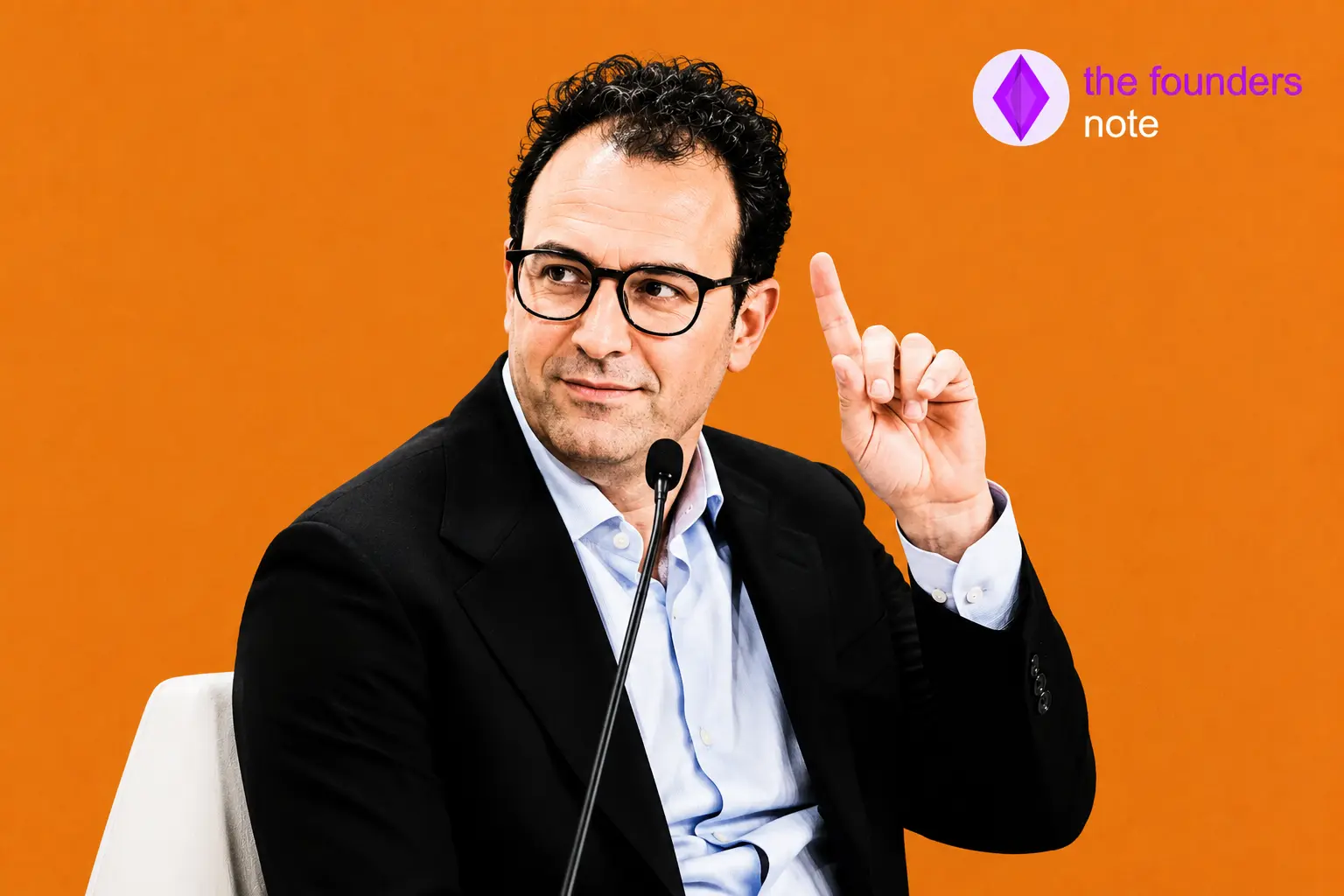
Dario Amodei: The Physicist Building Safe AI
From modeling neural circuits at Princeton to leading GPT-2 and GPT-3 at OpenAI, to co-founding Anthropic with his sister — this is the full story of the researcher trying to steer AI’s most powerful systems toward safety.

Co-Founder
Early Life & Family Origins
Dario Amodei was born in 1983 in San Francisco, California. His father, Riccardo Amodei, was an Italian-American leather craftsman from Massa Marittima, a small town in Tuscany, Italy, who had grown up an orphan before eventually settling in the United States. Riccardo passed away from long-term health problems while Dario was still a young adult, an event that friends and colleagues have described as formative for both Dario and his younger sister.
That sister, Daniela Amodei, was born four years after Dario, in 1987. The two would go on to become one of the more unusual sibling partnerships in modern technology, eventually co-founding Anthropic together and steering it from opposite ends of the leadership table — Dario as CEO, Daniela as President.
Education Foundations
Amodei’s academic path began in physics rather than computer science — an unusual entry point for someone who would later help build some of the world’s most advanced AI systems. He started his undergraduate studies at the California Institute of Technology around 2001, later transferring to Stanford University, where he completed his Bachelor of Science in Physics.
He then moved to Princeton University for doctoral work, earning a PhD in biophysics in 2011. His dissertation, titled “Network-Scale Electrophysiology: Measuring and Understanding the Collective Behavior of Neural Circuits,” focused on computational neuroscience — essentially, the mathematics of how networks of real neurons process information collectively. He followed his PhD with postdoctoral research at Stanford University School of Medicine, applying computational and machine-learning techniques to biological and medical data, including cancer-related research.
From Physics to AI Transition
Between his academic stints, Amodei took on applied work, including a part-time software developer role for a proteomics research tool and a longer consulting relationship with the R&D firm Applied Minds, where he had earlier interned as a student. This period bridged his scientific training with hands-on software engineering.
His full pivot into artificial intelligence began in 2014, when he joined Baidu as a research scientist, followed by a move to Google Brain as a senior research scientist in 2015. These roles placed him at the center of the deep learning boom, sharpening his focus on the scaling behavior of large neural networks — a theme that would define the rest of his career.
The OpenAI Years 2016–2020
In 2016, Amodei joined OpenAI as team lead for AI safety, rising to research director in 2018 and then Vice President of Research by the end of 2019. During this period, he played a central role in developing GPT-2 and GPT-3, language models that dramatically expanded what people believed text-generating AI could do. He is also credited as a co-inventor of reinforcement learning from human feedback (RLHF), a training technique that later became standard across the industry for aligning language models with human preferences.
He also co-authored influential research on “scaling laws” for neural language models — work that gave the field a predictable formula for how performance improves as models get larger, are fed more data, and receive more compute. That framework became a foundational reference point across the AI industry, shaping how nearly every major lab has approached model development since.
Leaving OpenAI & Founding Anthropic 2021
Amodei left OpenAI in December 2020, taking roughly a dozen senior researchers — including his sister Daniela, who had been OpenAI’s Vice President of Safety and Policy — with him. Reporting on the split has pointed to disagreements over the pace of capability development, the growing commercial pressure following Microsoft’s investment in OpenAI, and how safety research should be balanced against shipping ever-more-capable models.
In February 2021, Amodei and Daniela formally co-founded Anthropic along with several other former OpenAI colleagues. The new company was built around a specific premise: that AI models were becoming powerful enough to be genuinely useful and genuinely risky at the same time, and that a lab focused explicitly on safety needed to sit at the frontier of capability — not on the sidelines. In November 2023, during OpenAI’s internal leadership crisis, OpenAI’s board reportedly approached Amodei about replacing Sam Altman as CEO and potentially merging the two companies; Amodei declined both offers.
Constitutional AI & Claude Research
One of Amodei’s most cited contributions at Anthropic is his leadership on “Constitutional AI,” a training approach that aligns models with a defined set of written principles rather than relying purely on large volumes of human feedback labeling. Under this method, a model is guided to critique and revise its own responses against a written “constitution,” making the alignment process more transparent and scalable.
This research direction underpins Anthropic’s Claude models, first launched publicly in March 2023, and reflects the company’s broader bet that safety techniques need to evolve alongside — not after — capability gains. Anthropic has since become known equally for consumer and developer tools like Claude and Claude Code, and for research into mechanistic interpretability, the effort to understand what is actually happening inside a neural network rather than treating it purely as a black box.
Responsible Scaling & AI Safety Levels Framework
Amodei has been the public face of Anthropic’s Responsible Scaling Policy (RSP), a voluntary framework the company adopted to govern how it develops and releases increasingly capable models. He has described the idea as directly modeled on biosafety levels used for handling dangerous pathogens — instead, Anthropic defined a series of “AI Safety Levels” (ASL) tied to how much a given model’s capabilities could plausibly contribute to catastrophic harm.
According to Amodei’s own public comments, Anthropic’s models operated for years at ASL-2, a level comparable in risk to other existing technologies. By 2025, however, the company judged that certain Claude models had crossed into ASL-3 territory, largely due to evidence that advanced models could meaningfully increase the risk of misuse in sensitive biological domains — prompting additional safeguards rather than a pause in development.
“I think this is a science like the safety of airplanes or the safety of cars or the safety of drugs. I don’t think there’s any big thing we’re missing. I just think we need to get better at controlling these models.”
His Essays: Grace & Adolescence Public Writing
Machines of Loving Grace (October 2024)
In October 2024, Amodei published a sprawling, roughly 14,000–15,000-word essay titled “Machines of Loving Grace,” named after a Richard Brautigan poem. The essay lays out his vision of what a good outcome from powerful AI could look like — faster progress in biology and medicine, poverty reduction, and improvements to mental and physical wellbeing — while explicitly stating that this optimism does not replace his concerns about risk. He defined “powerful AI” as a system intellectually comparable to a Nobel Prize winner across most relevant fields, and floated that such a system could arrive as early as 2026, though he cautioned this was closer to an informed guess than a firm prediction.
The Adolescence of Technology (January 2026)
Roughly a year later, Amodei published a follow-up essay, “The Adolescence of Technology,” which struck a more explicitly cautionary tone. Drawing on the metaphor of humanity entering a turbulent rite of passage, he described a “country of geniuses in a datacenter” scenario in which millions of parallel AI copies could operate at many times human speed — and used it to argue that society’s institutions were not yet mature enough to safely handle the power such systems could unlock. Financial Times and Guardian coverage of the essay’s surrounding remarks quoted him warning that “humanity needs to wake up” to the risks involved.
He has also written more policy-oriented pieces arguing for binding AI regulation, contending that the voluntary transparency rules and export controls the industry has relied on so far — in his own words, “not enough, but they have felt like all that was possible” — need to give way to firmer legal requirements as risks become more concrete.
Views on Jobs, Risk & Regulation Public Voice
Amodei has become one of the AI industry’s more outspoken voices on the potential downsides of the technology he helps build. He has predicted that AI could eliminate a significant share of entry-level, white-collar jobs — by some of his estimates, as much as half of such roles within one to five years — a forecast that has drawn pushback from some rival executives. In September 2025, he was widely quoted estimating roughly a “25% chance that things go really, really badly” as AI capabilities continue to increase.
He has pushed back on being labeled a pessimist or “doomer,” framing his warnings as a first step toward solutions rather than fatalism, and has argued that advanced AI could also unlock dramatic benefits — potentially compressing a century of scientific progress into a decade. He has also advocated for what he calls an “entente” strategy: a coalition of democratic nations using advanced AI, including in military applications, to maintain a decisive advantage over authoritarian rivals while sharing civilian benefits with cooperating countries — a position that has drawn both support and criticism from foreign-policy commentators.
The 2026 Pentagon Standoff Policy Conflict
In February 2026, a dispute emerged between Anthropic and the U.S. Department of Defense, then led by Secretary Pete Hegseth, over the contractual terms governing military use of Claude. The Pentagon reportedly sought language authorizing “all lawful uses” of Anthropic’s technology without restriction; Amodei declined to remove existing contractual limits that barred the use of Claude for mass domestic surveillance or in fully autonomous weapons systems.
The standoff escalated when the administration announced it would end federal government use of Anthropic’s technology and designated the company a “supply-chain risk,” temporarily barring Pentagon contractors from using Anthropic products in contract-related work. Separately, that same period saw U.S. export controls briefly applied to Anthropic’s newer Claude models, which were lifted after further discussions between the company and government officials. Commentary on the episode has been mixed: some observers praised Amodei’s position as a rare instance of an AI company setting firm limits on military use, while others noted that the underlying contract language left significant ambiguity, and that Anthropic continued pursuing other government and defense-adjacent business during the same period.
Leadership Style Management
Amodei has become known for an unusual approach to running a fast-growing company: he keeps direct reports to a minimum — reportedly just one — and instead spends most of his time on research direction, strategy, and organizational culture rather than traditional line management. This is a notable contrast to peers like OpenAI’s Sam Altman, who has roughly half a dozen direct reports, or Nvidia’s Jensen Huang, who has said he has around 60. Amodei has described this structure as intentional, protecting his bandwidth for big-picture thinking rather than day-to-day people management.
Personal Life & Privacy Family
Amodei is known for keeping an unusually low personal profile for a tech CEO of his stature. He rarely discusses his private life in interviews, and detailed information about his marital status has not been widely publicized. In one 2026 profile, Bloomberg reported that he travels to Italy with his wife from time to time, where the couple keeps a horse — a rare personal detail from someone who otherwise steers almost every public conversation back to AI research and policy.
His sister and Anthropic co-founder, Daniela Amodei, is by contrast a somewhat more public figure on the personal side: she married Holden Karnofsky, co-founder of the effective-altruism-aligned funder now known as Coefficient Giving (formerly Open Philanthropy), in August 2017, and the couple has a son. Coverage has noted the overlap between the two families’ work, since Karnofsky later joined Anthropic to work on responsible-scaling strategy. Both siblings have been described in profiles as Jewish-American on their mother’s side, though neither has spoken at length publicly about personal religious practice.
Wealth & Net Worth Fortune
Amodei’s fortune is tied almost entirely to his equity stake in Anthropic, estimated at just under 1% of the company. Following Anthropic’s May 2026 funding round of $65 billion at a $965 billion post-money valuation, Bloomberg’s Billionaires Index estimated his individual stake at roughly $8 billion. Forbes has listed him on its 2026 global billionaires ranking, and various financial outlets have published net-worth estimates ranging from roughly $3.7 billion to $8 billion or more depending on methodology and timing, reflecting how quickly Anthropic’s valuation has moved during the year.
Unlike many of his billionaire peers, Amodei has been notably critical of the scale of wealth concentration the AI boom is producing, warning in his own essays about the risk of inequality exceeding Gilded Age levels as AI-driven fortunes grow. He has publicly pledged to give away roughly 80% of his net worth over time.
Honors & Awards Recognition
2023
2025
Dec 2025
2026
Research Metrics
Forbes 2026
Anthropic’s 2026 Growth Recent
Anthropic’s growth accelerated sharply into 2026. Amodei has said the company had planned for roughly tenfold growth but instead saw usage and revenue increase closer to eightyfold on an annualized basis in the first quarter, straining its computing infrastructure. To keep up, Anthropic struck major compute deals — including an agreement for capacity at a large data center — and raised new funding at a $965 billion valuation in May 2026, months after an earlier round had valued the company at roughly $380 billion in February of the same year.
The company also expanded its product line into new domains, including Claude Science, an offering aimed at researchers and the pharmaceutical industry, alongside its widely adopted Claude Code programming tool. In December 2025, Amodei drew attention for publicly contrasting Anthropic’s steadier growth with turbulence at rivals, remarking that Anthropic didn’t “have to do any code reds,” a pointed reference to internal alarm reportedly declared at OpenAI and Google around the same period.
Key Achievements Highlights
Anthropic
Constitutional AI
GPT-2 & GPT-3
RLHF
Scaling Laws
Responsible Scaling Policy
Full Work History Career Path
| Organization | Role | Period |
|---|---|---|
| Anthropic | Co-Founder & CEO | Feb 2021 – Present |
| OpenAI | Vice President of Research | Dec 2019 – Dec 2020 |
| OpenAI | Research Director | Sep 2018 – Dec 2019 |
| OpenAI | Team Lead, AI Safety | Jul 2016 – Sep 2018 |
| Google Brain | Senior Research Scientist | Oct 2015 – Jul 2016 |
| Baidu, Inc. | Research Scientist | Nov 2014 – Oct 2015 |
| Skyline Targeted Proteomics | Software Developer (part-time) | May 2013 – Dec 2014 |
| Stanford University School of Medicine | Postdoctoral Scholar | Dec 2011 – Dec 2014 |
| Applied Minds | Consultant | Feb 2008 – Jan 2013 |
| Princeton University | PhD Student, Computational Neuroscience | Sep 2006 – Nov 2011 |
| Schlumberger | Geophysicist | Feb 2004 – Sep 2004 |
| Applied Minds | Research Intern | Jul 2003 – Sep 2003 |
Quick Facts At a Glance
Full Name
Born
Nationality
Father
Sister
Education
Current Role
Joined Anthropic
Known For
Est. Net Worth
Milestone Timeline Journey
Born in San Francisco, California.
Studies physics at Caltech.
Brief stint as a geophysicist at Schlumberger.
Completes PhD in biophysics at Princeton, focused on computational neuroscience.
Postdoctoral research at Stanford University School of Medicine.
Joins Baidu as a research scientist, entering the AI industry.
Moves to Google Brain as a senior research scientist.
Joins OpenAI to lead AI safety efforts.
Becomes OpenAI’s Vice President of Research, overseeing GPT-2 and GPT-3.
Co-founds Anthropic with sister Daniela Amodei and becomes CEO.
Named to TIME’s 100 Most Influential People in AI; OpenAI board reportedly approaches him about replacing Sam Altman.
Publishes “Machines of Loving Grace.”
Named to TIME’s Person of the Year “Architects of AI.”
Publishes “The Adolescence of Technology.”
Standoff with the Pentagon over military use restrictions on Claude.
Anthropic raises $65B at a $965B valuation.
Frequently Asked Questions FAQ
Who is the CEO of Anthropic?
Dario Amodei is the co-founder and CEO of Anthropic, a role he has held since founding the company in February 2021.
What did Dario Amodei do before Anthropic?
He served as Vice President of Research at OpenAI, where he oversaw the development of GPT-2 and GPT-3, after earlier research roles at Google Brain and Baidu.
What is Dario Amodei’s educational background?
He studied physics at Caltech and Stanford, then earned a PhD in biophysics from Princeton, focusing on computational neuroscience, followed by postdoctoral work at Stanford Medicine.
What is Constitutional AI?
It’s an alignment method Amodei helped develop at Anthropic that trains AI models to follow a written set of principles, reducing reliance on large-scale human labeling.
Is Dario Amodei related to anyone else at Anthropic?
Yes — his sister, Daniela Amodei, co-founded Anthropic with him and serves as the company’s President.
What is Dario Amodei’s net worth?
Estimates vary by source and date, but Bloomberg placed his stake at roughly $8 billion in May 2026 following a major funding round; he has pledged to give away about 80% of his fortune over time.
What is the Responsible Scaling Policy?
It’s Anthropic’s internal framework, modeled on biosafety levels, for assessing how much risk a given AI model poses and what safeguards are required before it can be released.
From Neurons to Neural Networks
Dario Amodei’s path — from modeling biological circuits to leading one of the most influential AI labs in the world — reflects a career built on taking complex systems seriously, whether they’re made of neurons or parameters.