
Amancio Ortega
He left school at 13. He learned to sew in a tailor’s shop. He built the world’s most powerful fashion empire — and then chose to eat lunch in the cafeteria with his employees.
Brands: Zara · Massimo Dutti · Pull&Bear · Bershka · and ~100 more
Busdongo de Arbás, Spain
- A Railroad Worker’s Son — The Origin
- School at 13, Needle at 14 — The Tailor’s Apprentice
- 1963 — Bathrobes, Family & the First Business
- 1975 — The First Zara Store
- The Zara Formula — Speed, Frequency & Vertical Control
- Going Global — From Spain to Six Continents
- Building Inditex — A Fashion Conglomerate
- The 2008 Crisis — While Others Fell, Ortega Grew
- The World’s Richest Man — Briefly, in 2015
- The Man Behind the Empire — A Life of Radical Modesty
- The Full Journey — Every Milestone
- FAQs — Everything You Want to Know
A Railroad Worker’s Son — Born Into Hardship, 1936
On March 28, 1936, in the tiny mountain village of Busdongo de Arbás in the León province of northwest Spain, Amancio Ortega Gaona was born. It was not a promising address for a future billionaire. His father was a railroad worker. His mother was a housekeeper. The family had very little money and fewer expectations of ever having more.
Spain in 1936 was a country about to tear itself apart — the Spanish Civil War began that same year, followed by decades of poverty and authoritarian rule under Francisco Franco. Ortega grew up in a nation that was economically isolated, socially rigid, and deeply stratified. Working-class families like his had one trajectory: work hard, earn little, survive.
The family eventually moved to A Coruña in Galicia — a port city on Spain’s northwestern Atlantic coast. This city would become the permanent headquarters of everything Ortega would later build. But before any of that, there was school. And then there wasn’t.
School at 13, Needle at 14 — The Tailor’s Apprentice
Amancio Ortega left school when he was thirteen years old. There was no dramatic moment, no rebellion — just the quiet arithmetic of a poor family that needed income more than it needed another year of his education. He found work at a local shirt-maker’s shop in A Coruña, then at a tailor’s.
For years, he worked as a tailor’s apprentice — learning to cut fabric, sew seams, fit garments, and understand the mechanics of how clothing is made. Most people who spend years doing this leave the trade for something else. Ortega stayed curious. He noticed how slow and expensive the process was. He noticed that beautiful clothing was available only to people who could afford tailored pieces. He noticed the enormous gap between what people wanted to wear and what they could actually access and afford.
“I have never stopped learning. And the most important things I have ever learned, I learned in a workshop, not a classroom.”
— Attributed to Amancio Ortega (paraphrased from various interviews)Those years at the tailor’s bench were, in retrospect, the most important MBA Ortega could have received — a full immersion in supply chains, craftsmanship, consumer desire, and the economics of production. He had no formal business education. He didn’t need one. He had something better: a decade of watching the industry from the inside, with the eyes of someone who had nothing to lose by doing it differently.
Bathrobes, Cooperatives & A Kitchen-Table Empire Begins
In 1963, when Ortega was in his mid-twenties, he took his first real entrepreneurial step. Along with his siblings and his wife Rosalía Mera — who would become his essential co-founder and co-architect — he launched a small home-based business sewing quilted bathrobes and dressing gowns.
The operation, called Confecciones GOA (an acronym of Ortega’s name, reversed), started in his living room. But Ortega had an early insight about scale: you don’t just hire workers — you organize them. He recruited local women in Galicia into sewing cooperatives, distributing work across homes and small workshops rather than building a traditional factory. This model was faster, more flexible, and lower-cost — an early version of the distributed manufacturing logic that would eventually power Inditex’s entire supply chain.
By organizing local women into sewing cooperatives instead of building a centralized factory, Ortega created a production network that could scale up and down with demand — a concept decades ahead of what Silicon Valley would later call “the gig economy.” He was applying supply chain flexibility in 1963 Spain without a business degree or a management consultant in sight.
The bathrobe business grew steadily. Products expanded. More workers joined. Orders increased. Ortega was learning the mechanics of building a production and distribution business — slowly, methodically, without external investment and without fanfare. Twelve years of this would prepare him for the move that changed everything.
1975 — The First Zara Store Opens
In 1975, Amancio Ortega opened the first Zara store in A Coruña, Spain. The name was almost an accident — Ortega had originally wanted to call it Zorba (after the film Zorba the Greek), but discovered a bar nearby with the same name. With the signage already made, he rearranged the letters: Zara.
The store concept was simple and radical at the same time: bring fashion-forward clothing to ordinary people at prices they could actually afford. Not the luxury boutique. Not the discount pile. Something in between — well-designed, trend-relevant clothing at accessible prices, available now, before the trend had passed.
The first Zara store was a success. Ortega expanded. A second store. Then more across Galicia. Then across Spain. The model was working — and Ortega began to understand why at a level deeper than most fashion retailers ever would.
The Zara Formula — Speed, Frequency & Vertical Control
What Zara invented wasn’t just a store. It was a system for compressing time. Every other fashion retailer operated on a six-to-twelve-month design cycle: trends were spotted, designs were commissioned, factories in Asia were briefed, bulk orders were placed, and six months later, the clothing arrived in stores — sometimes after the trend had already passed.
Ortega built Zara to work on weeks, not months. Here is what made the model structurally different:
| Factor | Traditional Retailer | Zara’s Approach |
|---|---|---|
| Design-to-Store Speed | 6–12 months | As fast as 3 weeks |
| Inventory Refresh | Seasonal (2–4 times/year) | Up to 2 times per week |
| Production Location | Primarily Asia (low cost, slow) | Kept significant production in Europe for speed |
| Supply Chain Control | Outsourced to vendors | Largely owned and controlled by Inditex |
| Trend Intelligence | Runway + buyer intuition | Store managers feed real-time data on what customers buy and try |
| Customer Behavior | Customers wait for sales | Constant newness creates urgency — customers buy now or miss out |
The Three Pillars of Zara’s Competitive Advantage
- Speed: New styles can go from concept to store shelf in three weeks — the fastest turnaround in the industry. Most competitors take six months minimum.
- Scarcity by Design: Limited quantities of each style. When something sells out, it isn’t restocked — creating genuine urgency to buy immediately, not wait for a discount.
- Real-Time Feedback Loop: Store managers are trained to observe and report what customers are picking up, trying on, and leaving behind. This customer intelligence flows directly back to designers in Spain, who adapt new pieces in real time — not next season.
From Spain to Six Continents
After dominating Spain through the 1980s, Zara crossed into the rest of Europe. In 1989, it opened its first store in the Americas. The model translated perfectly across cultures — because fast fashion’s appeal isn’t cultural, it’s psychological. Newness. Accessibility. The feeling of wearing what’s trending, today.
Ortega didn’t franchise. He didn’t license the brand. He maintained ownership and control over every store — the same vertically-integrated discipline that ran the supply chain now governed the retail network. By the time he stepped down in 2011, Zara operated thousands of stores across six continents.
For most of its history, Zara spent almost nothing on traditional advertising. Ortega’s philosophy: the store is the advertisement. Prime real estate on the best shopping streets in every city. Beautiful window displays. Constant new product. When the store itself is compelling, customers come — and bring others. The money saved on advertising went into faster production and better locations.
Building Inditex — A Fashion Empire of 100 Brands
As Zara grew, Ortega didn’t stop at one brand. He created Industria de Diseño Textil — Inditex — as the parent company housing a growing portfolio of fashion brands, each targeting a different customer segment and aesthetic.
Inditex Brand Portfolio (Selected)
- Zara — The flagship. Fast fashion for mainstream consumers across ages.
- Massimo Dutti — Premium, sophisticated, more formal and conservative aesthetic.
- Pull&Bear — Youth-oriented, casual, streetwear influenced.
- Bershka — Ultra-trend-forward, targeting teenagers and young adults.
- Stradivarius — Young women’s fashion with a bohemian-romantic aesthetic.
- Oysho — Lingerie, activewear and homewear for women.
- Zara Home — Home textiles, furniture and decoration.
- ~100 additional brands and sub-labels under the Inditex umbrella
Inditex’s combined annual revenue exceeds $19 billion — making it the world’s largest fashion retail group by sales. The business that started with Ortega sewing bathrobes in his living room became a conglomerate spanning the entire globe.
In 2011, Ortega stepped down as the head of Inditex, handing executive leadership to Pablo Isla. But he retained his majority shareholding — and continued earning approximately $400 million per year in dividends.
The 2008 Crisis — While Others Fell, Ortega Grew
From 2008 to 2014, a global financial crisis devastated economies across the world. Spain was hit particularly hard — unemployment soared, Spanish stocks collapsed, and businesses shuttered across the country.
Inditex did the opposite. Ortega’s net worth grew by $45 billion between 2009 and 2014. Inditex’s stock rose as Spanish stocks fell. The fast fashion model — frequent new inventory at accessible prices — resonated even more deeply with consumers who were watching their budgets. When people can’t afford a wardrobe overhaul, they spend smaller amounts more frequently on individual trend pieces. Zara was built exactly for that behavior.
The crisis didn’t expose a weakness in the Zara model. It validated it. A business built on speed and accessibility had an inherent hedge against economic downturns that luxury brands and mid-market retailers lacked entirely.
The World’s Richest Man — Briefly, in 2015
By 2015, Ortega’s net worth had exceeded $70 billion. That year, as Inditex’s stock climbed, he surpassed Warren Buffett to become the second-richest person on the planet. And then, briefly, he surpassed Bill Gates — becoming the richest human being alive.
The newspapers reported it. The financial channels ran segments on it. Ortega himself almost certainly didn’t notice — or didn’t care. He was not a man who tracked stock prices for personal validation. The billionaire who once briefly held the title of world’s richest person had no personal publicist, had given almost no interviews in his life, and was not on social media. He was, in every measurable sense, the most private billionaire in the world.
“He dined in the company cafeteria. He wore simple clothes — not from Zara. He raised chickens at his estate. The world’s most powerful fashion man had no interest in fashion as personal theater.”
— Composite of multiple profiles on Ortega’s lifestyle, Telegraph & Business InsiderRadical Modesty — The Man Who Ignored His Own Wealth
Amancio Ortega is, by any measure, one of the most unusual billionaires in history. Not because of what he built — but because of how he chose to live alongside it.
How Ortega Lived — Despite the Billions
- Cafeteria lunches: While working at Inditex, he ate in the company cafeteria daily with regular employees — not in a private dining room or exclusive restaurant.
- Simple clothing: He wore plain, unpretentious clothes to work — famously not products from his own Inditex brands. He dressed like a factory supervisor, not a fashion billionaire.
- No interviews: In his entire career, he gave almost no media interviews. He is one of the least-documented billionaires of his generation despite being one of the richest.
- No social media: No Twitter. No LinkedIn. No public statements beyond official Inditex channels.
- Retirement activities: In retirement, Ortega spent time raising chickens on his estate. Not cultivating a startup portfolio or appearing on conference panels — raising chickens.
- Company visits: Even after officially retiring in 2011, he continued visiting Inditex’s headquarters — not to meddle, but because the company was genuinely the organizing principle of his life for decades.
His personal philosophy, observed rather than stated, seems to be this: the work is the point, not the status that comes from it. A man who dropped out of school at thirteen and learned to sew in someone else’s shop never stopped seeing himself as someone who makes things — not someone who owns things.
From Busdongo de Arbás to World’s Richest Man — Every Milestone
Here is the complete arc: from a railroad worker’s son in rural Spain to the man who redefined global fashion retail.
March 28, 1936. A mountain village in northwest Spain. His father is a railroad worker. His mother is a housekeeper. Spain is entering the Civil War. Poverty, hardship, and very limited horizons define his early years. The family later moves to A Coruña in Galicia — the city that will become the permanent home of Zara and Inditex.
At thirteen, Ortega drops out of school to help his family financially. He finds work at a local shirt-maker’s, then at a tailor’s shop in A Coruña. He spends years learning to cut, sew, and fit garments. Most people see tailoring as a trade. Ortega sees it as a lens for understanding why fashion is expensive, slow, and inaccessible to ordinary people — and what might happen if someone fixed that.
In his mid-twenties, Ortega launches Confecciones GOA with his siblings and his wife Rosalía Mera. They sew quilted bathrobes and dressing gowns from home. Ortega organizes local women into sewing cooperatives — a distributed, flexible production model years ahead of its time. The business grows steadily. He is building supply chain intuition, not chasing investors or growth metrics.
The first Zara store opens. Almost named Zorba — rearranged to Zara at the last minute. The concept: trend-relevant clothing at accessible prices, refreshed constantly. Customers respond immediately. The model works. A second store follows, then more across Galicia, then across Spain. The machine starts moving.
Through the 1980s, Zara expands aggressively across Spain and into the rest of Europe. Ortega launches other brands alongside Zara — building what will eventually become the Inditex portfolio. The fast-fashion model goes international. Europe hasn’t seen anything move quite this fast.
Zara crosses the Atlantic. The Americas prove as receptive as Europe. The model — speed, newness, accessibility — translates across cultures because the underlying psychology is universal. Ortega keeps building, quietly, without press releases or celebrity launches.
Ortega creates Industria de Diseño Textil (Inditex) as the umbrella entity housing Zara and his growing portfolio of fashion brands: Massimo Dutti, Pull&Bear, Bershka, Stradivarius, Oysho, Zara Home, and others. By now, Inditex is one of the world’s largest fashion groups, with stores on multiple continents and a supply chain model that competitors study but struggle to replicate.
Spain is devastated by the global financial crisis. Spanish stocks collapse. Unemployment surges. But Inditex thrives. Zara’s fast-fashion, accessible-price model proves recession-proof. Ortega’s net worth grows by $45 billion between 2009 and 2014 — one of the most counterintuitive wealth gains of the financial crisis era.
Ortega steps down from operational leadership of Inditex at age 75. Pablo Isla takes over as CEO. Ortega retains his controlling shareholding and continues earning approximately $400 million per year in dividends — passively, quietly, without any public announcement about his financial arrangements. He keeps visiting headquarters. The company is his life’s work.
As Inditex’s stock surges in 2015, Ortega’s net worth crosses $70 billion. He surpasses Warren Buffett. Then, briefly, he surpasses Bill Gates — becoming the richest human being on Earth. Somewhere in A Coruña, he is almost certainly not thinking about this. He is probably in the cafeteria, having lunch with the employees.
Founder of Inditex Group — The Man in One Frame
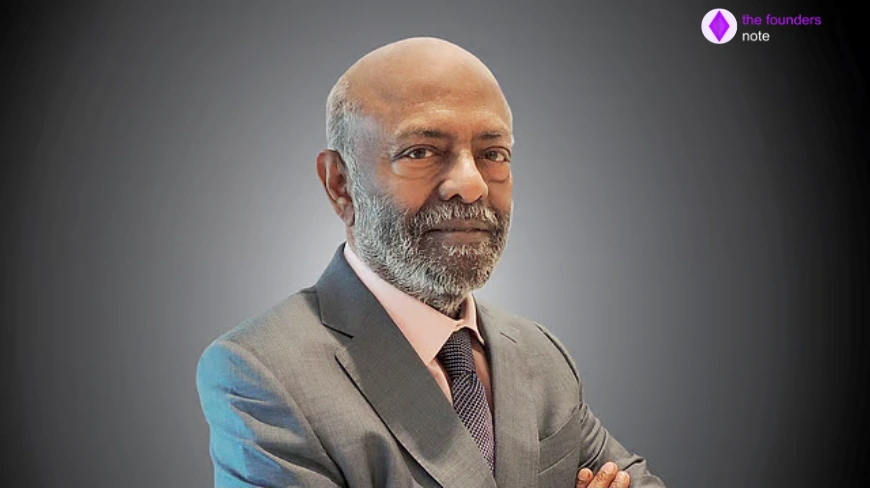
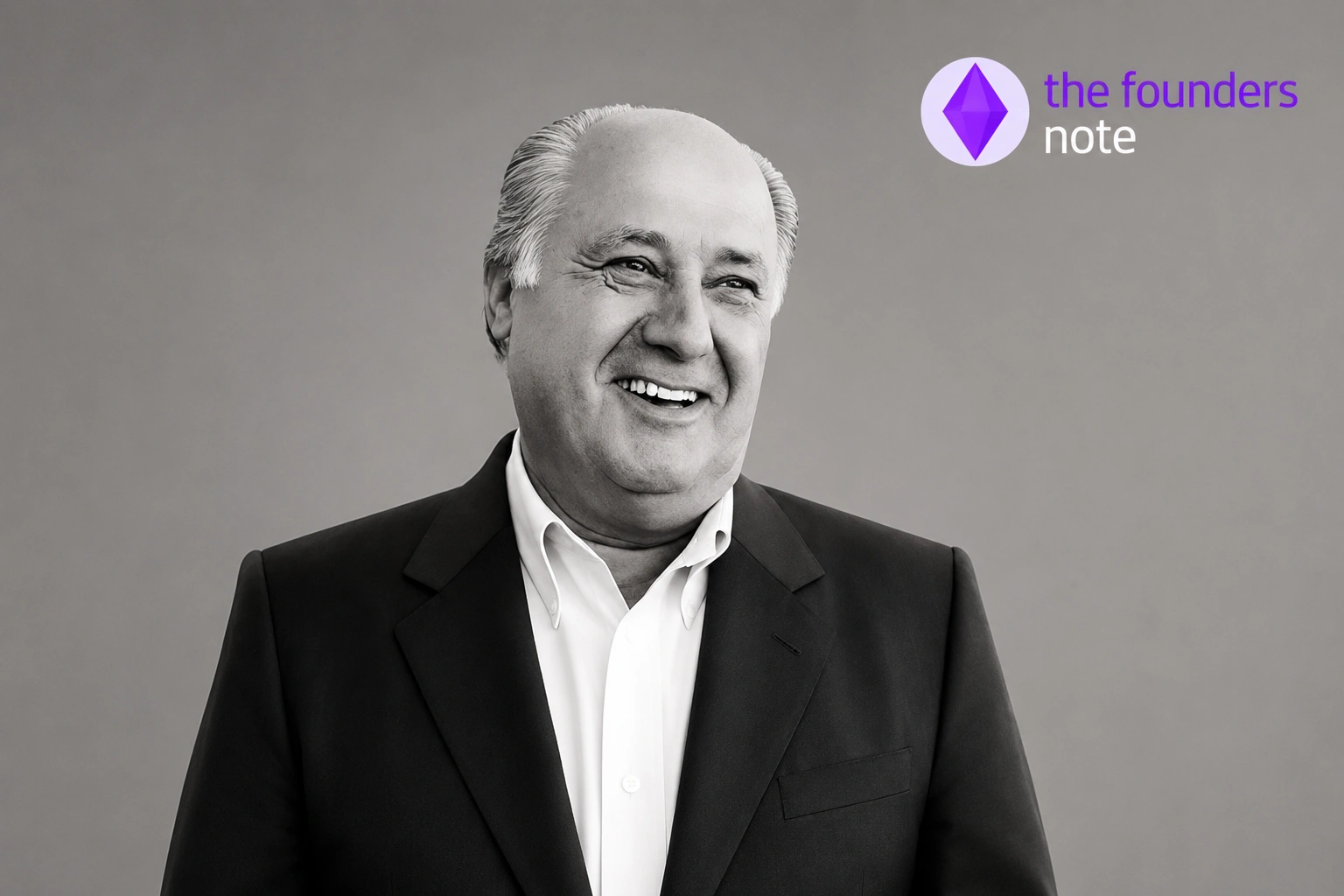
A Spanish self-made multi-billionaire, founder of Zara, and the architect of Inditex — the global retail conglomerate that owns men’s and women’s apparel, footwear, and home textiles businesses across the world. This illustration captures Ortega as he rarely appears: documented.

Family, Privacy & Life After Zara
Ortega married Rosalía Mera — his essential co-founder and the person without whom the first bathrobe cooperative and the first Zara store might never have existed. The couple separated in the mid-1980s and eventually divorced. Mera held the second-largest block of Inditex stock until her death in 2013, making her one of Spain’s wealthiest women in her own right.
After the divorce, Ortega married Flora Pérez Marcote. He has three children: Sandra and Marcos (from his marriage to Rosalía) and Marta (from his marriage to Flora). When Rosalía Mera died in 2013, she left her approximately 7% Inditex stake to their daughter Sandra — who became the richest woman in Spain overnight.
Who is Amancio Ortega?
Amancio Ortega (born March 28, 1936) is a Spanish billionaire and the founder of Zara and its parent company Inditex (Industria de Diseño Textil) — the world’s largest fashion retail group. He left school at age 13 to work as a tailor’s apprentice, launched a bathrobe business from his home in 1963, and opened the first Zara store in 1975. He briefly became the world’s richest person in 2015 with a net worth exceeding $70 billion.
When did Amancio Ortega open the first Zara store?
The first Zara store opened in 1975 in A Coruña, Spain. It was almost named Zorba (after the film Zorba the Greek) but was renamed Zara after Ortega found a nearby bar with the same name. After the first store succeeded, Ortega expanded aggressively — first across Spain, then Europe, then globally from 1989 onwards.
What makes Zara’s business model unique?
Zara’s model rests on speed, scarcity, and vertical control. New styles can reach stores within three weeks of a trend being spotted — vs. six to twelve months for traditional retailers. Stores refresh inventory up to twice a week. Limited quantities create urgency (buy now or miss out). Store managers feed real-time customer behavior data back to designers in Spain. And Inditex maintains significant control over its own supply chain, including European production facilities for the fastest turnaround items.
What is Inditex and what brands does it own?
Inditex (Industria de Diseño Textil) is the world’s largest fashion retail company, founded by Amancio Ortega as the parent company of his growing brand portfolio. Key brands include Zara, Massimo Dutti, Pull&Bear, Bershka, Stradivarius, Oysho, and Zara Home. The group owns approximately 100 brands and generates over $19 billion in annual revenue.
When did Amancio Ortega step down from Inditex?
Amancio Ortega stepped down as head of Inditex in 2011, handing operational leadership to Pablo Isla. He retained his controlling shareholding and continued earning approximately $400 million per year in dividends. He continued to visit the company’s headquarters after retirement.
How did Zara perform during the 2008 financial crisis?
Zara and Inditex thrived during the 2008–2014 global financial crisis while other retailers struggled. Ortega’s net worth grew by $45 billion between 2009 and 2014, and Inditex’s stock rose even as Spanish stocks fell sharply. Zara’s fast-fashion model — frequent new inventory at accessible price points — resonated more strongly with budget-conscious consumers during the downturn, turning a global crisis into a competitive advantage.
Is Amancio Ortega known for a humble lifestyle?
Yes — famously so. Despite being one of the world’s richest people, Ortega ate lunch daily in the company cafeteria with regular employees, wore simple and unpretentious clothing (not from his own brands), gave almost no media interviews in his entire career, maintained extreme personal privacy, and in retirement reportedly spent time raising chickens on his estate. He has no known social media presence and actively avoided public attention throughout his career.
Who are Amancio Ortega’s children?
Ortega has three children from his two marriages. From his marriage to co-founder Rosalía Mera: daughter Sandra and son Marcos. From his second marriage to Flora Pérez Marcote: daughter Marta. Sandra Ortega became the richest woman in Spain after inheriting Rosalía Mera’s approximately 7% stake in Inditex following her mother’s death in 2013.
What was Amancio Ortega’s first business?
Ortega’s first business was Confecciones GOA, launched in 1963 with his siblings and his then-wife Rosalía Mera. The company sewed quilted bathrobes and dressing gowns, with production organized through local women’s sewing cooperatives. This business became the foundation from which Zara and Inditex would eventually grow.
Has Amancio Ortega ever been the richest person in the world?
Yes — briefly in 2015. As Inditex’s stock rose, Ortega’s net worth crossed $70 billion, surpassing Warren Buffett to become the second-richest person on Earth. He then briefly surpassed Bill Gates to claim the title of world’s richest person before the rankings shifted again. He remained one of the top two or three wealthiest individuals in the world through much of 2015–2016.