
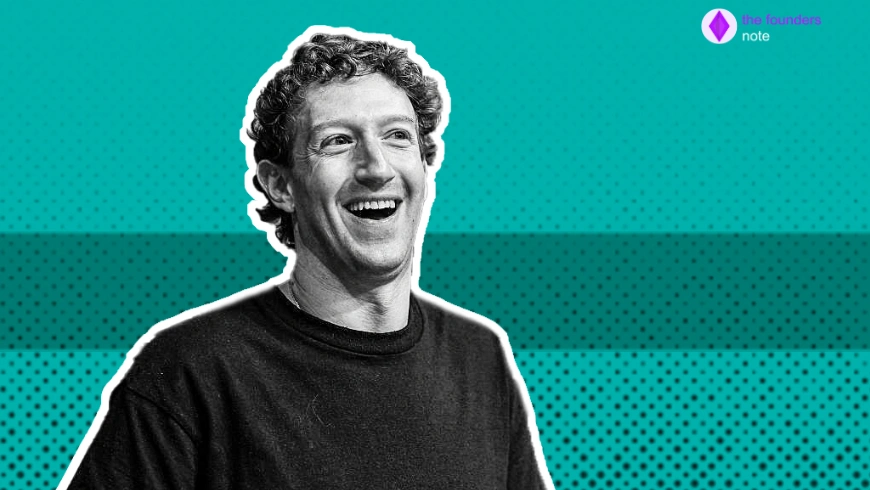
Mark Zuckerberg: From Dorm Room to Meta
From a childhood messaging program built for his father’s dental office to running one of the most valuable and controversial companies on Earth — this is the full story of Facebook’s founder.

Meta
Early Life & Family Origins
Mark Elliot Zuckerberg was born on May 14, 1984, in White Plains, New York, and grew up in nearby Dobbs Ferry. His father, Edward Zuckerberg, was a dentist who ran a practice attached to the family home, and his mother, Karen (née Kempner) Zuckerberg, worked as a psychiatrist and also helped manage the business side of her husband’s practice. Zuckerberg was raised alongside three sisters — Randi, Donna, and Arielle — in a Reform Jewish household; the family’s great-grandparents had emigrated from Austria, Germany, and Poland. Randi would later become a senior marketer at Facebook, Donna became a classical scholar and author, and Arielle went on to become a venture capitalist.
Childhood Coding & ZuckNet Foundations
Zuckerberg received his first computer, a Quantex 486 DX running Windows 3.0, at around age ten, and immediately began customizing it. At about age eleven or twelve, he created a messaging program called “ZuckNet” that let computers at the family home communicate with his father’s dental office — a tool his father used professionally and the whole family used at home. He also designed computer games using graphics drawn by artistic friends, and his parents hired a private tutor to deepen his computing education. The New Yorker later observed of him: “Some kids played computer games. Mark created them.”
Zuckerberg initially attended Ardsley High School. While still in high school, his parents felt the local school wasn’t providing everything he needed, so after two years he transferred to the prestigious Phillips Exeter Academy in New Hampshire in 2000. He also took a graduate-level computer science course at Mercy College on Thursday evenings while still a high schooler.
Phillips Exeter & Synapse 1998–2002
At Phillips Exeter, Zuckerberg earned honors in math, astronomy, and physics, and served as captain of the school’s fencing team. He also displayed a striking aptitude for languages, able to read and write in French, Hebrew, Latin, and ancient Greek.
With his roommate Adam D’Angelo, Zuckerberg built Synapse, an MP3 player program that used early machine-learning techniques to generate playlists based on a user’s listening habits. The project drew coverage on Slashdot and a 3-out-of-5 rating from PC Magazine, and it attracted serious interest from both Microsoft and AOL, each of which offered to buy the software and hire Zuckerberg straight out of high school. He turned both down, choosing instead to enroll at Harvard University in 2002 to study computer science and psychology.
Harvard: Facemash & CourseMatch 2002–2004
By the time Zuckerberg arrived at Harvard, The New Yorker noted he already carried a “reputation as a programming prodigy.” He resided in Kirkland House and belonged to the Alpha Epsilon Pi fraternity. In his sophomore year, he built CourseMatch, a program that let students choose classes based on other students’ selections and helped them form study groups, and separately archived the Harvard Crimson newspaper to identify connections among students.
He then created Facemash, a site that displayed photos of students — pulled after he hacked into Harvard’s online student ID photo directories — and asked visitors to vote on who was “hotter” between two images, generating a ranking from the results. His roommate at the time, Arie Hasit, later explained the inspiration: physical directories called “Face Books” existed in student dorms with names and photos of everyone living there, and Zuckerberg’s site simply put two photos head-to-head and let visitors vote on who was better-looking. The site went up over a weekend but was shut down by Monday after its popularity overwhelmed a Harvard network switch and many students complained their photos had been used without consent. Zuckerberg publicly apologized and avoided expulsion, though the student paper ran pieces calling the site “completely improper.”
Founding Facebook February 2004
In January 2004, at age nineteen, Zuckerberg began writing code for a new website. On February 4, 2004, he launched “Thefacebook” at thefacebook.com, in partnership with roommates Eduardo Saverin, Andrew McCollum, Dustin Moskovitz, and Chris Hughes, built over roughly a two-week period as a directory of student photos and information at Harvard. Some biographers trace an earlier inspiration to Phillips Exeter’s own student directory, nicknamed “The Facebook” by students there.
Six days after launch, Harvard seniors Cameron Winklevoss, Tyler Winklevoss, and Divya Narendra accused Zuckerberg of stealing their idea for a social network called HarvardConnection.com, which he had earlier agreed to help build. The three complained to The Harvard Crimson, which opened an investigation; Zuckerberg reportedly tried to dissuade editors from running the story and, separately, accessed two editors’ email accounts using data logged through Thefacebook. As the site’s popularity grew, Zuckerberg — with help from Moskovitz — expanded it to Columbia, NYU, Stanford, Dartmouth, Cornell, the University of Pennsylvania, Brown, and Yale.
The Move to Palo Alto Summer 2004
Zuckerberg dropped out of Harvard in his second year to pursue the project full-time. He, Moskovitz, and the other cofounders moved to Palo Alto, California, in June 2004, leasing a small house that doubled as their first office, while Chris Hughes stayed behind to finish his degree and manage Facebook’s public relations. The group initially planned to return to Harvard but ultimately stayed in California, drawn by what Zuckerberg later called the “mythical place” of Silicon Valley — turning down early buyout offers from major corporations along the way.
That same month, a rival campus-only service called i2hub, built by Wayne Chang for peer-to-peer file sharing, was also drawing rapid growth and press attention. In August 2004, Zuckerberg, Andrew McCollum, Adam D’Angelo, and Sean Parker responded by launching their own competing file-sharing service, Wirehog — a project that served as an early precursor to the Facebook Platform, which launched properly in 2007.
Speaking at Y Combinator’s Startup School course at Stanford in 2004, Zuckerberg made a controversial claim that “young people are just smarter” than older ones, suggesting other entrepreneurs should lean toward hiring younger talent — a comment that drew lasting criticism. In April 2009, he also sought financing advice from former Netscape CFO Peter Currie. On July 21, 2010, Zuckerberg announced that Facebook had crossed the 500-million-user mark.
The Winklevoss & Saverin Lawsuits 2004–2008
The Winklevoss twins and Divya Narendra filed suit in 2004; the case was dismissed on a technicality in March 2007 before being refiled in federal court in Boston, with Facebook countersuing over a related project called Social Butterfly. The dispute settled on June 25, 2008, with Facebook agreeing to transfer roughly 1.2 million shares and pay $20 million in cash. Separately, in November 2007, court documents containing Zuckerberg’s Social Security number and his parents’ and girlfriend’s home addresses were controversially published by the Harvard-alumni magazine 02138; Facebook’s attempt to have them removed was rejected by the presiding judge.
Cofounder Eduardo Saverin filed a separate 2005 lawsuit alleging Zuckerberg had improperly spent his money on personal expenses; it was settled out of court under sealed terms, with Facebook affirming Saverin’s title as a cofounder and Saverin agreeing not to discuss the matter publicly further.
Early Funding & Rejected Buyouts 2004–2007
After meeting Zuckerberg, Napster founder Sean Parker joined the early Facebook team and negotiated a $500,000 investment from PayPal cofounder Peter Thiel. In 2005, Accel Partners invested $12.7 million, and the company raised a further $27.5 million from investors including Greylock Partners and Meritech Capital Partners.
When Viacom moved to buy Facebook in 2006, Zuckerberg countered by raising the asking price to $2 billion, and Viacom walked away. He subsequently turned down a $1 billion acquisition offer from Yahoo, prompting Fast Company to dub him “the kid who turned down $1 billion.” By 2007, Facebook had reached 20 million users, rolled out a new design, added network portals, and opened the platform to outside developers — with the company valued at $15 billion that year.
Growth, Culture & Hackathons Company Culture
Chris Hughes left Facebook in 2007 to run Barack Obama’s online campaign, and Dustin Moskovitz remained as vice president of engineering until 2008. Facebook kept a small-company feel for years, in part because desks — including those of Zuckerberg and COO Sheryl Sandberg — sat together in a general open area. After moving to a much larger Menlo Park, California campus in 2012, the company preserved some of that atmosphere with a cozy, downtown-style area of cafeterias and shops.
Zuckerberg embraced a self-described “hacker” identity, telling journalist Steven Levy that “it’s OK to break things to make them better.” Facebook instituted regular hackathons every six to eight weeks, complete with music, food, and beer, where employees — including Zuckerberg — built projects overnight; the word “Hack” was prominently displayed throughout the company’s offices. By 2011, Facebook’s user base had grown to include 47% of Americans, alongside major international bases including 31.8 million users in Germany, 31.6 million in India, 19.9 million in Canada, 18.6 million in Brazil, 9.5 million in Russia, and 7.1 million in Egypt.
Internet.org & Global Reach International
At the 2013 TechCrunch Disrupt conference, Zuckerberg said he was working to connect the roughly five billion people worldwide who lacked internet access, tying the goal to a new initiative called Internet.org, through which Facebook and partner technology companies aimed to expand global connectivity. The project faced significant backlash in India, where activists argued its limited, Facebook-curated version of the internet violated net neutrality principles; Zuckerberg countered that limited internet access was better than none, but the service was ultimately shut down in India in February 2016.
Zuckerberg also built relationships with foreign governments and leaders during this period. On October 1, 2012, he met with then-Russian Prime Minister Dmitry Medvedev in Moscow to encourage social media innovation and strengthen Facebook’s position in the Russian market — at the time, Facebook had around 9 million Russian users compared with roughly 34 million for the domestic rival VK. In December 2014, he hosted China’s internet policy chief Lu Wei, known as the country’s “Internet czar,” at Facebook’s headquarters alongside fellow tech leaders Jeff Bezos and Tim Cook, after participating in a Mandarin-language Q&A at Beijing’s Tsinghua University that October. He delivered the keynote address at the 2014 Mobile World Congress in Barcelona, addressing 75,000 delegates on mobile technology’s role in Facebook’s future.
Zuckerberg is also a board member of Breakthrough Starshot, a solar-sail spacecraft research project he co-founded in 2016 alongside investor Yuri Milner and physicist Stephen Hawking.
The Ceglia Lawsuit 2010–2012
In 2010, Paul Ceglia, owner of a wood-pellet fuel company in upstate New York, sued Zuckerberg claiming an 84% ownership stake in Facebook based on an alleged 2003 contract. Facebook dismissed the claim as frivolous; federal authorities arrested Ceglia in October 2012 on mail and wire fraud charges, alleging he had fabricated emails to support the suit — investigators found no mention of Facebook in his genuine correspondence with Zuckerberg from that period.
Other Notable Incidents Miscellany
In June 2010, Pakistan’s then-Deputy Attorney General launched a criminal investigation into Zuckerberg and fellow Facebook cofounders Dustin Moskovitz and Chris Hughes after a “Draw Muhammad” contest was hosted on the platform, seeking their arrest for blasphemy through Interpol; Pakistan’s government temporarily blocked Facebook nationwide until the contest was removed at the end of that month. In August 2013, The Washington Post reported that Zuckerberg’s own Facebook profile had been hacked by an unemployed web developer.
Questioned about the 2013 PRISM surveillance scandal at that year’s TechCrunch Disrupt conference, Zuckerberg said flatly that the U.S. government “blew it” in protecting citizens’ freedoms. On a lighter note, in June 2013 Zuckerberg joined Facebook employees on a company float at the San Francisco LGBT Pride Celebration — its participation had grown from about 70 employees in 2011 to roughly 700 by 2013, a march that took on added significance following the Supreme Court’s ruling that year striking down the Defense of Marriage Act.
In a notable symbolic gesture, Zuckerberg’s annual base salary was reduced to just $1 starting January 1, 2013. In June 2016, Business Insider named him one of the “Top 10 Business Visionaries Creating Value for the World,” alongside Elon Musk and Sal Khan, citing his and Chan’s pledge to give away 99% of their then-roughly-$55-billion fortune. In January 2019, he outlined plans to bring end-to-end encryption to Facebook, Instagram, and WhatsApp, and in August 2020 Facebook integrated Instagram and Messenger’s chat systems to allow cross-platform communication.
Going Public & Marriage May 2012
Priscilla Chan, then a medical student at the University of California, San Francisco, moved into Zuckerberg’s rented Palo Alto house in September 2010. Zuckerberg took Facebook public on May 18, 2012, retaining majority voting control. The very next day, May 19, 2012, he married Chan — his girlfriend of nine years, whom he had met at a Harvard fraternity party and began dating in 2003 — in a ceremony at his Palo Alto home that doubled as a celebration of Chan’s recent graduation from medical school. Zuckerberg wore a suit for the occasion, a departure from his usual casual style, while Chan wore a gown by designer Claire Pettibone and was escorted down the aisle by the couple’s Hungarian sheepdog, Beast.
Philanthropy & the Giving Pledge 2010–Present
Zuckerberg signed the Giving Pledge in 2010 alongside Bill Gates and Warren Buffett, committing to donate at least half his wealth to charity over his lifetime. In September 2010, he donated $100 million to Newark, New Jersey’s public school system — a gift some observers linked to the near-simultaneous release of The Social Network, though journalist Dale Russakoff later reported much of the money was ultimately wasted. In December 2013, he donated 18 million Facebook shares (roughly $990 million) to the Silicon Valley Community Foundation, the largest publicly recorded charitable gift of that year, and he and Chan topped the Chronicle of Philanthropy’s list of America’s most generous donors for 2013.
In October 2014, the couple donated $25 million to fight the West African Ebola epidemic, and in February 2015 endowed San Francisco General Hospital with $75 million — the largest individual gift ever made to a U.S. public hospital, which was subsequently renamed in the couple’s honor (a renaming the San Francisco Board of Supervisors later voted to condemn amid Facebook-related controversies). On December 1, 2015, following the birth of their first daughter, Zuckerberg and Chan pledged to give away 99% of their Facebook shares — then valued at about $45 billion — over their lifetimes through the newly created Chan Zuckerberg Initiative (CZI), structured as an LLC rather than a traditional charitable foundation. In 2016, CZI committed $600 million to launch the Chan Zuckerberg Biohub, a research collaboration among UCSF, UC Berkeley, and Stanford.
The Cambridge Analytica Scandal 2018
Facebook had weathered plenty of earlier criticism with limited personal fallout for Zuckerberg, but that changed after the 2016 U.S. presidential election, when investigations found Russian-linked actors had used Facebook and other platforms to spread misinformation aimed at damaging Hillary Clinton’s campaign and aiding Donald Trump’s. In March 2018, it emerged that Cambridge Analytica, a British data firm that had worked on the Trump campaign, had harvested the private data of more than 50 million Facebook users without consent — and that Facebook had initially downplayed the breach and wrongly claimed the firm no longer held the data.
The scandal triggered a major stock decline and calls from lawmakers in both the U.S. and U.K. for Zuckerberg to testify. He was initially silent, then took out full-page newspaper apology ads and pledged reforms. A separate leaked internal memo around the same time suggested Facebook had, at points, valued its connectivity mission even at the cost of harms such as cyberbullying or facilitating terrorist coordination. In July 2018, a report on slowing growth and weak revenue sent Facebook’s stock sharply lower, cutting Zuckerberg’s personal wealth by an estimated $16 billion in a single day, though the stock recovered in the following months. Zuckerberg ultimately settled the long-running Cambridge Analytica litigation in July 2025.
Congressional Testimonies 2018–2024
Zuckerberg testified before the U.S. Senate Commerce, Science, and Transportation Committee on April 10–11, 2018, regarding the Cambridge Analytica affair, calling it a breach of trust involving researcher Aleksandr Kogan, Cambridge Analytica, and Facebook — though he declined to appear before a U.K. parliamentary committee on the same matter. In October 2020, the Senate Commerce Committee voted to subpoena Zuckerberg alongside Google’s Sundar Pichai and Twitter’s Jack Dorsey over Section 230 legal protections. In July 2020, he testified before Congress again on antitrust concerns alongside other major tech CEOs.
On March 25, 2021, he testified before the House Energy and Commerce Committee on misinformation, data handling, and Facebook’s role around the January 6 Capitol attack. In January 2024, during a Senate Judiciary Committee hearing on child safety, Zuckerberg stood and turned to face families in the audience, offering a direct apology to parents whose children had been harmed through social media.
Separate litigation has alleged Zuckerberg personally overrode senior Meta executives — including Instagram head Adam Mosseri and global affairs president Nick Clegg — on proposals meant to improve teen mental health on Instagram, according to internal communications disclosed in a Massachusetts-led lawsuit; a separate New Mexico lawsuit has alleged Meta failed to adequately restrict minors’ access to AI chatbot companions and sexualized content.
Libra & Political Content Battles 2019–2020
In June 2019, Zuckerberg announced Facebook was developing a cryptocurrency called Libra, backed by significant blockchain investment and partnerships across the technology and financial sectors. The project drew heavy scrutiny from financial regulators, and Zuckerberg testified before the House Financial Services Committee about it in October 2019. Around the same time, Zuckerberg publicly defended Facebook’s policy of not removing false or misleading political advertising, arguing that people deserved to reach their own conclusions without platform censorship — a position that drew significant criticism given widespread concern about users’ ability to distinguish misinformation.
January 6 & the Trump Ban 2021
Facebook drew criticism from across the political spectrum through 2020 — accused of anti-conservative bias by Trump and his supporters, and of tolerating misinformation about the election and COVID-19 by many progressives. After Trump was accused of inciting the January 6, 2021 attack on the U.S. Capitol, Zuckerberg announced Trump’s Facebook account would be suspended indefinitely. He was questioned again about misinformation before a House subcommittee in March 2021.
The Meta Rebrand & Metaverse 2021–2023
In October 2021, amid continued scrutiny — intensified after a former employee leaked internal documents on data privacy and misinformation — Zuckerberg announced Facebook’s corporate parent would rebrand as Meta, alongside plans to expand from social media into the “metaverse,” a proposed next phase of the internet built around virtual reality. Many observers read the rebrand partly as an effort to distance the company from Facebook’s accumulated controversies.
Through 2021 and 2022, Meta poured extensive resources into VR, but its flagship product, Horizon Worlds, launched to buggy performance and weak consumer demand — a significant setback that drew internal and external criticism of Zuckerberg’s metaverse focus. Antitrust pressure continued as well: in July 2022, the FTC blocked Meta’s proposed acquisition of VR fitness app maker Within, a decision Meta challenged.
Layoffs & Financial Struggles 2022–2023
Meta’s market value fell roughly 60% between October 2021 and October 2022 amid metaverse spending, weak ad performance, and intensifying competition from TikTok among younger users. By September 2022, Zuckerberg’s personal net worth had reportedly fallen by about half — a loss of roughly $76.8 billion. Meta laid off 11,000 employees in November 2022 and instituted a hiring freeze, with Zuckerberg personally apologizing to staff and taking responsibility in an internal letter. A further significant round of layoffs followed in March 2023, part of a broader contraction across the tech industry.
The Pivot to AI 2025
Shifting focus away from its underperforming VR ventures, Zuckerberg announced in early 2025 that Meta would prioritize artificial intelligence, with plans for major AI-related investment that year alone. This included the creation of Meta Superintelligence Labs, a new division dedicated to frontier AI research, alongside construction of multiple large AI data centers.
The 2025 Shift Toward Trump Political Realignment
As Donald Trump’s second term approached in early 2025, Zuckerberg’s relationship with him shifted notably. Meta rolled back several content-moderation policies, including eliminating Facebook and Instagram’s third-party fact-checking programs, while Zuckerberg publicly criticized “legacy media” for promoting censorship. He dined with Trump at Mar-a-Lago, donated $1 million to Trump’s inaugural committee, and attended the inauguration alongside a handful of other prominent technology leaders — moves many analysts interpreted as an effort to shield Meta from mounting legal and political pressure, including the FTC’s roughly $30 billion antitrust case against the company. In 2026, Zuckerberg was appointed to the President’s Council of Advisors on Science and Technology (PCAST) by President Trump.
This marked a significant reversal from Zuckerberg’s earlier public positioning: in his twenties he had backed various progressive causes, and Republicans had generally viewed him as left-leaning, including criticizing contributions toward election infrastructure that critics labeled “Zuckerbucks.” In an August 2024 letter to the House Judiciary Committee, Zuckerberg said he regretted not doing more to resist pressure from the Biden administration to moderate COVID-19-related content, and reporting has since described him as privately leaning toward libertarian or classical-liberal politics.
Hawaii Land Controversy 2014–Present
In 2014, Zuckerberg purchased roughly 700 acres on the Hawaiian island of Kauaʻi. In January 2017, he filed eight “quiet title and partition” lawsuits against hundreds of native Hawaiians holding small ownership stakes within his acreage; after facing public backlash and learning Hawaiian land law differs significantly from that of other states, he dropped the suits, saying he regretted not understanding the process beforehand. The disputed land parcels were later resolved through auction. Zuckerberg has continued expanding the estate since, paying $17 million for an additional 110 acres in December 2021 and spending at least $145 million in total on a roughly 1,450-acre, partially gated retreat where he has documented raising Wagyu and Angus cattle with his daughters.
Political Views & Activity Public Positions
Zuckerberg has never publicly disclosed a party affiliation. He registered to vote in 2002 but didn’t cast a ballot until 2008, and is officially registered with “no preference.” In 2013, he founded the immigration-reform lobbying group FWD.us, which also drew criticism for backing ads supporting oil and gas projects including Arctic drilling and the Keystone XL pipeline — prompting a boycott by several progressive organizations. He has hosted political fundraisers for Republican Chris Christie and Democrat Cory Booker, largely centered on education reform.
In December 2015, following the Paris and San Bernardino attacks, Zuckerberg posted in support of Muslims in the Facebook community, citing his own Jewish upbringing’s lessons about standing against attacks on any community. In February 2016, he issued an internal memo condemning employees who crossed out “Black Lives Matter” phrases on office walls and replaced them with “All Lives Matter,” calling the practice “malicious” and launching an internal investigation. In January 2017, he criticized Trump’s executive order restricting immigration from several countries, and he later funded a California ballot initiative to raise commercial property taxes.
Personal Life & Family Family
Zuckerberg and Priscilla Chan, a pediatrician, have three daughters: Maxima (“Max”), born in December 2015 (whose Chinese name is Chen Mingyu); August, born in August 2017; and a third daughter, born in March 2023. Chan had previously experienced three miscarriages before their first successful pregnancy. The family lives on a large compound in the Crescent Park neighborhood of Palo Alto; in November 2025, WIRED reported on neighbor complaints regarding an unpermitted school operating on the property. In March 2026, the couple purchased a home in Indian Creek, Florida — an exclusive enclave nicknamed the “Billionaires’ Bunker” — for a Miami-Dade County record of $170 million.
The couple’s Hungarian sheepdog (Puli breed), Beast, became something of a minor celebrity in his own right, amassing more than two million Facebook followers. In 2024, Zuckerberg commissioned artist Daniel Arsham to create a seven-foot sculpture of Chan, which was unveiled that year.
Yachts, Hobbies & Style Lifestyle
In 2024, Zuckerberg purchased a roughly $300 million, 387-foot megayacht named Launchpad, delivered by Dutch builder Feadship, alongside a smaller 220-foot support vessel called Wingman valued at around $30 million. Media reports in 2025 tracked the two-vessel fleet on voyages including a trip to Norway’s fjords for heliskiing and an extended stay in French Polynesia; the yachts have also drawn protests from climate activists over their emissions during Arctic visits.
Raised in a Reform Jewish household, Zuckerberg has described periods of questioning his faith and later said he came to see religion as “very important.” In 2022, he took up mixed martial arts and Brazilian jiu-jitsu, competing in a 2023 BJJ tournament where he won gold and silver medals at the white-belt level, and was promoted to blue belt later that year. Since 2024, he has also become known for a notably changed personal style — trading his once-signature gray T-shirt and jeans for gold chains and trendier streetwear, a shift some commentators linked to his broader political realignment.
Awards & Recognition Recognition
| Year | Honor |
|---|---|
| 2007 | MIT Technology Review’s TR35 (top innovators under 35) |
| 2008, 2011, 2016, 2019, 2025 | TIME’s Most Influential People in the World |
| 2010 | TIME Person of the Year |
| 2010 | Vanity Fair’s #1 Most Influential Person of the Information Age |
| 2016 | Forbes World’s Most Powerful People (ranked 10th) |
| 2017 | Honorary degree from Harvard University |
| 2023 | Ranked 8th on Forbes 400 wealthiest Americans, ~$106 billion |
| Oct 2024 | Becomes the world’s second-richest person |
| 2024 | Included on the TIME 100 AI list |
Beyond his Kauai estate, Zuckerberg holds a roughly $320 million real estate portfolio spanning ten homes across Palo Alto, San Francisco, and Lake Tahoe, totaling more than 1,400 acres.
Quick Facts At a Glance
Full Name
Born
Education
Current Role
Company Founded
Spouse
Children
Meta Stake
Est. Net Worth
Known For
Milestone Timeline Journey
Born in White Plains, New York.
Transfers to Phillips Exeter Academy.
Enrolls at Harvard University.
Launches Facemash; begins dating Priscilla Chan.
Launches Thefacebook.com and moves to Palo Alto.
Rejects Viacom’s and Yahoo’s buyout offers.
Settles the Winklevoss/ConnectU lawsuit.
Named TIME Person of the Year; signs the Giving Pledge.
Facebook goes public; marries Priscilla Chan.
Launches the Chan Zuckerberg Initiative; first daughter born.
Cambridge Analytica scandal; testifies before Congress.
Bans Trump’s account after January 6; rebrands company as Meta.
Meta’s value plunges; major layoffs follow.
Pivots focus to AI; aligns more closely with the Trump administration.
Appointed to the President’s Council of Advisors on Science and Technology.
Frequently Asked Questions FAQ
Who is Mark Zuckerberg?
Mark Zuckerberg is an American entrepreneur and programmer who founded Facebook in 2004 and now serves as founder, chairman, and CEO of its parent company, Meta Platforms.
Did Mark Zuckerberg graduate from Harvard?
No. He dropped out in his second year to focus on Facebook full-time, though Harvard awarded him an honorary degree in 2017.
Why did Facebook rebrand as Meta?
In October 2021, Zuckerberg announced the rebrand to reflect the company’s expansion beyond social media into virtual reality and the “metaverse,” amid ongoing scrutiny of Facebook’s platform.
What was the Cambridge Analytica scandal?
A 2018 revelation that the British firm Cambridge Analytica had harvested the personal data of more than 50 million Facebook users without consent, triggering lawsuits, congressional testimony, and a long-running legal battle Zuckerberg settled in 2025.
What is Mark Zuckerberg’s net worth?
Forbes estimated his net worth at approximately $251 billion as of October 2025, making him the third-richest person in the world at that time, driven mainly by his roughly 13% stake in Meta.
Is Mark Zuckerberg married?
Yes, he married Priscilla Chan in May 2012, the day after Facebook’s IPO; the couple has three daughters.
From a Dorm Room to the Metaverse and Back to AI
Mark Zuckerberg’s story — from a childhood messaging program built for his father’s dental office to steering one of the world’s most valuable companies through scandal, rebranding, and a bet on artificial intelligence — is a case study in staying in control through constant reinvention.
The Social Network Film 2010
By the end of 2009, Facebook employed more than a thousand people and claimed over 350 million users. That year, author Ben Mezrich published The Accidental Billionaires, drawing heavily on interviews with Eduardo Saverin, who was then suing Zuckerberg. The book became the basis for The Social Network (2010), starring Jesse Eisenberg as Zuckerberg; screenwriter Aaron Sorkin has said he prioritized storytelling over strict accuracy. Zuckerberg later joked that the film’s only accurate detail was his wardrobe, and biographer David Kirkpatrick has estimated the film is “only 40% true.”
After learning about the project, Zuckerberg initially said, “I just wished that nobody made a movie of me while I was still alive.” He later made a good-humored surprise appearance on Saturday Night Live opposite Eisenberg in January 2011, calling the film “interesting” when asked his opinion.