
Aman Gupta Takes Goafest 2026 on a Boat-Ride: Why Founders Must Stop Playing Safe
boAt co-founder Aman Gupta on listening to younger employees, letting go of control as companies scale, and why an IPO isn’t urgent for a profitable company.

Building a successful consumer brand today means founders have to stop playing it safe, listen to a generation that questions everything, and resist the urge to control every decision — that was the core message from boAt co-founder Aman Gupta at Goafest 2026.
Listening to the Next Generation
Speaking at a session titled “Resetting the Rules: Building Brands That Don’t Play Safe,” Gupta credited much of boAt’s growth to spotting shifts in consumer behaviour early and letting younger employees shape how the brand actually sounds and looks. He pointed to a moment early in boAt’s journey when a 19-year-old team member, not a senior executive, ended up steering key marketing calls simply because they understood emerging social media culture better than anyone else in the room.
Why Founders Must Hand Over Control
Gupta argued that one of the biggest mistakes growing companies make is dismissing ideas from younger employees and clinging to strictly hierarchical decision-making. He described a generational shift in how authority itself gets questioned inside companies today.
He extended that thinking to his own role. Gupta, who has stepped back from an executive position at boAt, said Indian founders in general still find it hard to loosen their grip on operations as companies scale. Running a large, publicly accountable company, he argued, requires a different skill set entirely — one built around compliance, governance, and organisational structure — that professional managers are often better equipped to handle than the original founders.
The IPO Question: Why boAt Isn’t Rushing
Boat’s long-rumoured plans to go public came up directly. Gupta said an IPO remains on the table but isn’t something the company needs urgently, given it’s already profitable and not dependent on public capital to keep operating. He acknowledged that early investors will eventually want an exit, but said the company would rather wait for the right market conditions than force a listing.
He pointed to shifting sentiment toward technology and consumer startups as the reason previous attempts at going public had been pushed back, framing it as a timing decision rather than a change of plan.
Lessons From Scaling Too Fast
Gupta was candid about mistakes made during boAt’s rapid growth phase. After raising outside capital, the company professionalised quickly — expanding offices, making acquisitions, and hiring senior executives at a pace that, in hindsight, he felt could have been better paced. The company eventually recalibrated its approach and returned to profitability.
Marketing in the Age of Internet Culture
According to Gupta, modern marketing depends less on large ad budgets and more on understanding internet culture and reacting to it quickly. He said brands need to track what communities are actually discussing and how trends evolve, rather than relying purely on traditional advertising cycles. Younger employees and interns, he added, are often far better positioned to catch these cultural shifts early than senior leadership.
Betting on Talent Before They Were Famous
Budget constraints shaped boAt’s early marketing as much as strategy did. Gupta recalled wanting a star like Virat Kohli in the brand’s early days but being priced out entirely. Instead, boAt backed rising talent early — cricketers Hardik Pandya, Rishabh Pant, and Shreyas Iyer, and actors Kartik Aaryan and Kiara Advani — before they became the marquee names they are today.
Gupta called it the “challenger route” — signing people before they got expensive, and growing alongside them as their profiles rose.
Product First, Marketing Second
Gupta pushed back on the idea that boAt’s success came from marketing alone, insisting that product quality was just as central to the brand’s growth as any campaign. A strong marketing push might bring in customers once, he said, but without a product that holds up, they won’t return.
India’s Many Subcultures
A recurring theme in Gupta’s talk was that India shouldn’t be treated as one homogeneous market. He described the country as a collection of distinct subcultures — spanning music, cricket, fashion, and entertainment — each requiring its own approach rather than a single, broad campaign.
The Rise of Startup Culture in India
Gupta closed by reflecting on how entrepreneurship itself is now viewed in India. Where children once looked up primarily to film stars and cricketers, he said many now aspire to build their own companies — a shift he partly credits to shows like Shark Tank India, which he said helped move startup culture into mainstream households.
His Shark Tank India Journey
Away from boAt, Gupta is just as widely recognised for his seat on Shark Tank India, the Indian adaptation of the global investing show. He has appeared as a judge and investor across all five seasons since the show launched in December 2021, making him one of its most consistent faces alongside fellow sharks like Namita Thapar, Peyush Bansal, and Vineeta Singh.

His investment style has stayed fairly consistent across seasons: he tends to back consumer and D2C brands he understands instinctively — from food and personal care to fashion — often teaming up with other sharks on larger deals rather than always going solo. In Season 1 alone, he put in more than ₹6.7 crore across the businesses he backed. Some of his better-known bets include Skippi Ice Pops, Hoovu Fresh, The Cinnamon Kitchen, Shiprocket, WickedGud, and Bummer, several of which saw sales jump noticeably in the weeks after their episodes aired.
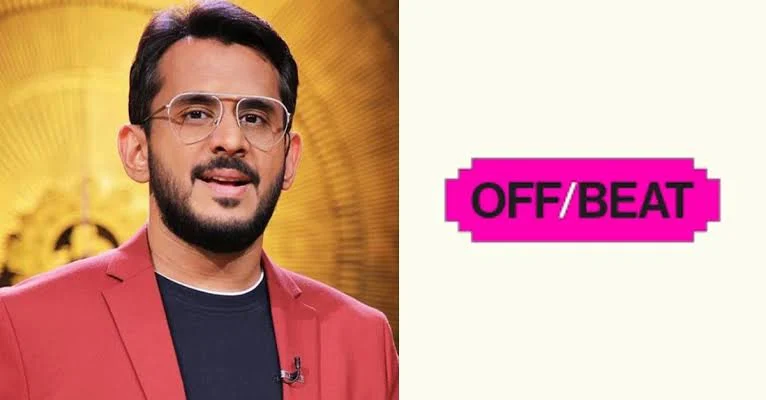
Over five seasons, Gupta’s portfolio has grown to more than 100 companies, a mix of solo bets and joint deals with other sharks. Beyond the cheques, the show turned him into something closer to a mentor-at-scale — a role he’s leaned into further with his newer venture, Offbeat Studios, and one that’s visibly shaped how he talks about founders needing to be backed rather than second-guessed, a theme that ran through his Goafest 2026 session as well.
Frequently Asked Questions
The questions readers most often ask about Aman Gupta and boAt.
Who is Aman Gupta?
Aman Gupta is the co-founder of boAt, one of India’s largest audio and wearables brands, and the founder of Offbeat Studios. He is also widely known as a panellist on Shark Tank India, where he invests in and mentors early-stage entrepreneurs.
What did Aman Gupta say at Goafest 2026?
In a session titled “Resetting the Rules: Building Brands That Don’t Play Safe,” he spoke about listening to younger employees, empowering teams to shape brand voice, handing operational control to professional managers as companies scale, and why boAt is in no rush to go public despite an IPO remaining an option.
Is boAt planning an IPO?
An IPO remains an option for boAt but isn’t urgent, since the company is already profitable and doesn’t need public money immediately. Gupta said previous listing attempts were delayed due to shifting market sentiment toward technology and consumer startups.
How did boAt build its brand on a limited budget?
Unable to afford top-tier celebrities initially, boAt signed emerging talent early — including cricketers Hardik Pandya, Rishabh Pant, and Shreyas Iyer, and actors Kartik Aaryan and Kiara Advani — before they became major stars, growing alongside them.
What is Offbeat Studios?
Offbeat Studios is a venture founded by Aman Gupta, separate from his co-founder role at boAt, from which he has stepped back from day-to-day executive responsibilities.
What is Aman Gupta’s view on founders controlling every decision?
He believes founders should increasingly hand over operational control to professional managers as companies scale, arguing professionals can often run large, complex organisations better than founders alone — particularly around compliance, governance, and structure.
How many seasons of Shark Tank India has Aman Gupta been on?
He has appeared as a judge and investor on all five seasons of Shark Tank India since the show launched in December 2021, investing in over 100 companies across those seasons, including well-known bets like Skippi Ice Pops, Hoovu Fresh, and Shiprocket.
Source
- ETBrandEquity — “Aman Gupta takes Goafest 2026 on a boat-ride,” coverage of the Goafest 2026 session