
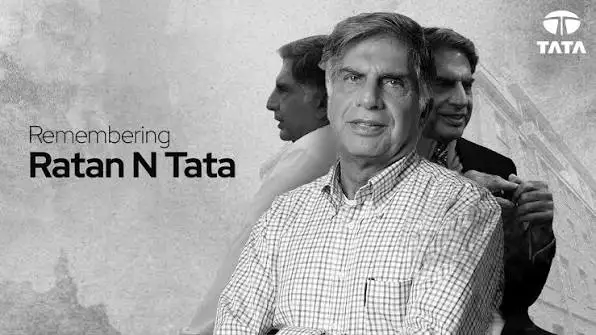
Ratan Tata: His Full Story, Legacy & Words
28 December 1937 — 9 October 2024Ratan Tata never sought the spotlight the way his acquisitions demanded it. Yet over five decades, he took a 130-year-old family conglomerate and turned it into a name recognised on every continent — surviving boardroom battles, a terror attack on his own flagship hotel, personal humiliations he later called motivating, and a succession crisis that briefly put him back in the chairman’s seat he thought he had left behind.
Last updated: 1 July 2026 · 18 min readThe Tata Legacy He Inherited
To understand Ratan Tata, it helps to start seven decades before he was born. In 1868, a 29-year-old Jamsetji Nusserwanji Tata — Ratan Tata’s great-grandfather — started a trading company in Bombay with roughly ₹21,000 in capital. Jamsetji spent the rest of his life chasing four ambitions: a steel company, a world-class hotel, a hydroelectric power plant, and a world-class educational institution. He personally saw only the hotel completed — the Taj Mahal Palace, which opened in Bombay in 1903 as India’s first luxury hotel — before his death in 1904. His sons, Sir Dorabji and Sir Ratanji Tata, delivered the rest: Tata Steel in 1907 and Tata Power in 1910.
Ratan Tata’s own name traces back to this generation — his father Naval Tata was adopted into the family of Sir Ratanji Tata, making Ratan Tata a direct heir to that founding vision long before he ever set foot in Bombay House, the Tata Group’s headquarters.
Early Life and Family
Ratan Naval Tata was born on 28 December 1937 in Bombay, the eldest son of Naval Tata and Sonoo Commissariat. His parents separated when he was around ten, and he was largely raised by his grandmother, Lady Navajbai Tata — an upbringing steeped in a family tradition of public service and giving back, long before he ever held a corporate title. He completed his early schooling at Mumbai’s Cathedral and John Connon School.
Cornell, a Detour to America, and the Return Home
In 1955, Ratan Tata left for Cornell University in the United States, where he earned a degree in architecture and structural engineering. He also attended Harvard Business School’s Advanced Management Program in 1975. He initially planned to build a career in America. Those plans changed when his grandmother’s health began to decline, drawing him back to India. In 1962, he formally began his career with the Tata Group, starting at Tata Industries before moving into hands-on roles at TELCO (now Tata Motors) and Tata Steel — learning the business from the shop floor up rather than stepping straight into a boardroom.
He joined the board of Tata Sons in 1974, a full 17 years before he would lead it.
Becoming Chairman of Tata Sons
Ratan Tata took over as Chairman of Tata Sons in 1991, succeeding J.R.D. Tata at a pivotal moment — the same year India opened up its economy to private enterprise and global competition. Rather than protect the group’s existing businesses, he pushed the Tata Group to think and compete internationally, setting the stage for two decades of aggressive, deliberate expansion.
Global Acquisitions and the Tata Nano
Under his leadership, the Tata Group made a series of landmark international acquisitions that reshaped how the world saw Indian business. In 2000, it acquired the UK’s Tetley Tea for roughly $431 million. In 2004, it bought the truck-manufacturing operations of Daewoo Motors for about $102 million. In 2007 came the group’s largest deal yet — the Anglo-Dutch steelmaker Corus Group, for approximately $11.3 billion. A year later, in 2008, Tata acquired British car brands Jaguar and Land Rover from Ford for around $2.3 billion — a deal many doubted at the time, and one that later became one of the group’s most profitable bets.
That same year, closer to home, Tata launched the Nano — an ambitiously priced “people’s car” aimed at putting car ownership within reach of millions of Indian families for the first time.
The Ford Story: Fact vs. Legend
One of the most widely shared stories about Ratan Tata goes like this: in 1999, after Tata Motors’ first passenger car, the Indica, struggled commercially, Tata flew to Detroit to explore selling the passenger car division to Ford. In the popular telling, Ford’s leadership dismissed the offer, reportedly remarking that Tata didn’t know the car business and that Ford was doing him a favour by buying it. Tata, the story goes, walked away, poured himself into fixing the Indica instead, and nine years later bought Jaguar Land Rover from a struggling Ford — a poetic reversal of fortune.
Standing Outside the Taj During 26/11
On 26 November 2008, ten gunmen struck multiple locations across Mumbai, including the Taj Mahal Palace Hotel — the very hotel Jamsetji Tata had built in 1903. Over the next 60 hours, 33 people died at the Taj alone, including 11 hotel staff who stayed behind to help guests escape. Ratan Tata, then 70, spent much of the siege standing at the Colaba end of the hotel, watching security forces work to retake it floor by floor.
What followed mattered as much as the vigil itself. Tata reopened the Taj within a month. He personally visited the homes of employees who had died, and ensured their families continued receiving the salaries they would have earned over their careers — a commitment that extended even to street vendors working outside the hotel. Weeks later, he and IHCL vice-chairman R.K. Krishna Kumar set up the Taj Public Service Welfare Trust, built not just for Tata employees but for any Indian citizen affected by terrorism, war, or disaster.
Choosing a Successor: The Cyrus Mistry Years
Finding a successor took nearly two years of deliberation. In 2012, Cyrus Mistry — son of Pallonji Mistry, whose family held roughly 18.4% of Tata Sons and had backed Ratan Tata’s own appointment back in 1991 — was named Chairman, becoming only the second person outside the Tata family to lead the group. Tata publicly praised Mistry’s judgment and humility at the time, and stayed closely involved through his role as Chairman of Tata Trusts, which controls the majority stake in Tata Sons.
The relationship deteriorated over the following years. In October 2016, the Tata Sons board abruptly removed Mistry as Chairman, and Ratan Tata returned as interim Chairman while the group searched for a permanent replacement — N. Chandrasekaran was appointed a few months later. Mistry contested his removal in court, alleging mismanagement and unfair treatment of minority shareholders; the dispute wound through India’s company tribunals for years before the Supreme Court ultimately ruled in favour of Tata Sons in 2021. Cyrus Mistry passed away in a car accident in September 2022, before the chapter fully closed in the public eye.
Retirement — and Life After the Corner Office
Ratan Tata formally stepped down as Chairman of Tata Sons in December 2012, having transformed a primarily domestic conglomerate into a genuinely global one. His brief return as interim chairman between 2016 and 2017 was the exception, not a change of plan. In the years that followed, he stayed visible through a second, quieter career: mentoring young entrepreneurs, personally investing in dozens of Indian startups across fintech, e-commerce, and mobility, and increasingly sharing reflections and advice with the public through social media — a habit unusual for a businessman of his generation.
Why He Never Married
Ratan Tata never married, a fact he addressed candidly in later interviews rather than avoiding. He has said he came close to marriage on four separate occasions and stepped back each time for reasons that varied case to case — and that, looking back, he didn’t consider it a mistake given how demanding his life and career turned out to be. He was known separately for a lifelong love of dogs, frequently seen with rescued strays at Bombay House, and for a passion for flying that he once said he would only give up with real sadness.
Philanthropy and the Tata Trusts
Ratan Tata’s involvement with Tata Trusts began decades before he ran the Tata Group. In 1965, he was inducted as a Trustee of the Sir Ratan Tata Trust, a role his grandmother Lady Navajbai had championed as its chairperson since 1919. He became Chairman of the Sir Ratan Tata Trust in 1989, and of the Sir Dorabji Tata Trust in 1993.
Under his guidance, the Trusts moved away from traditional, one-off charity toward a more strategic, sustainable model of philanthropy — one focused on measurable outcomes rather than visibility. In 1993, additional funds were directed specifically toward women’s and children’s health, education, and livelihood programmes, reflecting his consistent emphasis on strengthening women’s roles within their communities. In 2014, he introduced what the Trusts call the “Matrix Approach” — a cluster-based model that combined health, education, skilling, and livelihood interventions within the same regions, designed to produce lasting change rather than isolated wins.
Key Legacy Projects
Over the decades, Ratan Tata’s Trusts backed a wide range of large-scale initiatives across India: the Central India Initiative supporting tribal livelihoods, the Himmothan Pariyojana focused on Himalayan development, the Tata Water Mission, and support for national programmes like Swachh Bharat and Jal Jeevan Mission. Technology-driven partnerships followed too — Internet Saathi with Google India to spread digital literacy, education programmes with Khan Academy India, and collaborations with Harvard, MIT, IISc, TIFR, and the IITs to bring research-backed solutions to agriculture, cancer care, and women’s self-help groups.
Cancer care
Expanded access to high-quality, affordable cancer treatment through a nationwide network of facilities.
Nutrition
Backed multi-sector interventions spanning maternal health, clean water, and livelihoods to tackle malnutrition.
Animal welfare
Championed the Small Animal Hospital, reflecting his personal, well-known love for animals.
Leading the COVID-19 Response
When the pandemic hit India in March 2020, Ratan Tata moved fast. Tata Trusts pledged ₹500 crore, and Tata Sons committed a further ₹1,000 crore — a combined ₹1,500 crore group-wide response, one of the largest corporate pandemic commitments in India. The money went toward protective equipment, ventilators, testing kits, modular treatment facilities, and training for frontline health workers, with Tata Trusts running its “One Against Covid-19” programme to coordinate the effort. Tata was also named among the trustees advising the government’s PM CARES relief fund.
Awards and Recognition
Ratan Tata received India’s Padma Bhushan in 2000 and its Padma Vibhushan in 2008 — the country’s third- and second-highest civilian honours. Internationally, he was made an Honorary Knight Commander of the Order of the British Empire in 2009, later advanced to Honorary Knight Grand Cross of the Order of the British Empire in 2014, making him the first Indian to receive that honour since 1950. He also received France’s Commander of the Legion of Honour in 2016 and an Honorary Officer of the Order of Australia in 2023, among numerous other national and international distinctions.
Passing and Lasting Legacy
Ratan Tata passed away on 9 October 2024 at Breach Candy Hospital in Mumbai, at the age of 86, following age-related health complications. His death prompted a state day of mourning in Maharashtra and tributes from across the world — from business leaders and heads of state to the countless communities his philanthropic work had quietly touched over the decades.
His legacy sits in an unusual middle ground: a businessman remembered as much for how he built as for what he gave away. The global brands he brought under the Tata name are only half the story — the other half is a philanthropic institution that, by his own account, was never about visibility, but about doing something meaningful with the responsibility that came with the Tata name.
After Ratan Tata: Noel Tata and Today’s Tata Group
Two days after Ratan Tata’s death, the trustees of Tata Trusts unanimously elected his half-brother, Noel Tata, as the new Chairman — the body that controls roughly 66% of Tata Sons, the Group’s holding company. Noel Tata had spent years building his own track record leading Trent, Voltas, and Tata International, and had joined the Sir Ratan Tata Trust board in 2019, making him the natural, long-anticipated successor even though Ratan Tata had never formally named one.
Day-to-day, the Tata Group is run separately by N. Chandrasekaran, who has been Chairman of Tata Sons since 2017 and has continued expanding the group — most notably reacquiring Air India in 2022, the airline JRD Tata had founded in 1932 and lost to nationalisation in 1953, closing a symbolic 69-year loop in the group’s history that Ratan Tata lived to see.
Famous Ratan Tata Quotes
Words he’s remembered for, in his own voice.
The day I am not able to fly will be a sad day for me.
I may have hurt some people along the way.
If a founder has passion and innovation, he needs to be supported.
New startups embody the creativity, the innovation of young people.
India needs to come out of its socialist pattern of doing things.
None can destroy iron, but its own rust can.
We can be hurt, but we cannot be knocked down.
I have always stood up for what I consider to be the right thing.
Frequently Asked Questions
The questions people most often search about Ratan Tata.
Who is Ratan Tata?
Ratan Naval Tata (28 December 1937 – 9 October 2024) was an Indian industrialist and philanthropist who served as Chairman of Tata Sons and the Tata Group from 1991 to 2012, and again as interim chairman from 2016 to 2017. He is widely credited with transforming Tata into a globally recognised conglomerate.
What is Ratan Tata known for?
He is known for landmark global acquisitions including Tetley Tea, Corus Group, and Jaguar Land Rover, for launching the Tata Nano as an affordable car for Indian families, and for his extensive philanthropic work through Tata Trusts in healthcare, education, nutrition, and disaster relief.
What are some major acquisitions by Ratan Tata?
Under his leadership, Tata acquired Tetley Tea for around $431 million in 2000, the truck-manufacturing arm of Daewoo Motors for about $102 million in 2004, Corus Group for approximately $11.3 billion in 2007, and Jaguar Land Rover for around $2.3 billion in 2008.
What awards did Ratan Tata receive?
He received India’s Padma Bhushan in 2000 and Padma Vibhushan in 2008. He was also made an Honorary Knight Commander of the Order of the British Empire in 2009 and advanced to Honorary Knight Grand Cross of the Order of the British Empire in 2014, among several other national and international honours.
How did Ratan Tata contribute to society?
Through Tata Trusts, he led large-scale philanthropic work in healthcare, education, nutrition, and rural development, including expanding affordable cancer care across India, funding disaster relief efforts, and backing initiatives such as Internet Saathi and technology-enabled education programmes.
Why did Ratan Tata remove Cyrus Mistry as Chairman?
Cyrus Mistry was removed as Chairman of Tata Sons in October 2016 after growing friction with the Tata Trusts board over strategy and decision-making. The dispute led to a lengthy legal battle that ultimately reached India’s Supreme Court, which ruled in favour of Tata Sons in 2021.
Was Ratan Tata ever married?
No, Ratan Tata never married. He said in interviews that he came close to marriage on four occasions but backed away each time, and in hindsight did not view it as a bad thing given how his life and career unfolded.
When did Ratan Tata retire, and when did he pass away?
He retired as Chairman of Tata Sons in December 2012, though he briefly returned as interim chairman in 2016. He remained active in philanthropy and business advisory roles until his passing on 9 October 2024 in Mumbai.
Who founded the Tata Group?
The Tata Group was founded in 1868 by Jamsetji Nusserwanji Tata, Ratan Tata’s great-grandfather, who started it as a trading company in Bombay with about ₹21,000 in capital before expanding into textiles, steel, hydroelectric power, and hospitality.
What did Ratan Tata do during the 26/11 Mumbai attacks?
He stood outside the besieged Taj Mahal Palace Hotel for three days during the November 2008 attacks, reopened the hotel within a month, personally visited victims’ families, ensured continued salaries for deceased staff, and set up the Taj Public Service Welfare Trust for victims of terrorism and disasters.
Who leads Tata Trusts after Ratan Tata’s death?
Noel Tata, Ratan Tata’s half-brother, was unanimously elected Chairman of Tata Trusts on 11 October 2024, two days after Ratan Tata’s passing. Tata Trusts hold roughly 66% of Tata Sons.
Sources & Further Reading
- Tata Trusts — Ratan N. Tata: His Legacy and Vision
- Wikipedia — Ratan Tata, Cyrus Mistry, Noel Tata, Jamsetji Tata, Tata Group (biographical and corporate timelines)
- Britannica — Ratan Tata and Jamsetji Tata biographies; Tata Group corporate history
- Autocar Professional — fact-check on the 1999 Ford/Detroit meeting story
- The Week and Outlook Business — coverage of the 2016 Tata Sons leadership transition
- Tata Group Newsroom — “Rising Phoenix” (26/11 response) and Covid-19 response coverage
- Business Standard — Noel Tata’s appointment as Tata Trusts Chairman, October 2024
- BrainyQuote — verified Ratan Tata quotations
- Contemporaneous news coverage of Ratan Tata’s passing, October 2024